Gorean Glossary B
Gor is a complex lifestyle based on a series of novels by John Norman featuring a strict caste system of highly trained Free and slaves. For more information, check out the Garden's section on Gor.
Note about this Glossary: items marked with a K are Kassar or Old Gorean, online-created languages used to augment Gorean. Kassar was not created or endorsed by John Norman and is not consistent within the Gorean language or universe. Kassar should be used cautiously and sparingly as many Goreans do not use or approve of the language.
| Ba HabaKa'an | Not ever (never) (No-forever) | K |
| Bakahs | a minor tribe of the Tahari; they are a vassal tribe of the Kavars | |
| Baker's Knot | A specialized knot type developed by the caste of Bakers designed for use in tying sacks around the neck of a slave. The slave in essence is unable to see the knot, even if she by chance works it forward to more easily undo. By not seeing the knot, she cannot know how to retie it properly. Such a knot is supposed to minimize pilfering of pastries which might be tempting to a slave girl. | |
| Bakers, Caste of | One of the low castes of Gor. | |
| Bal | Air, Wind | K |
| Baleen Whale | The physiological genus of whales. The Karl whale falls under the category of a baleen whale. Baleen refers to the physical structure of the whale, specifically, having whale bone plates rather than teeth. This definition is supported with the following: | |
Ball-Gag |
Device used on slaves to keep them silent. | |
| Ballistae | One of several light siege engines used by the military of Gor. | |
| bana | jewelry of precious metals and stones worn by the Free | |
| Band | Highly militaristic and organized, with divisors and multiples having to do with seemingly, a base-twelve mathematics, a Band is a Kurii military unit formed of twelve (12) Beasts, or "Kurii;" commanded by a Blood. | |
| Banner Keeps | Keeps owned by the merchant caste in which they fly the banner of the city under which the keep is established and administered. | |
| BanRa, WanRa | leader, he who makes rules, main man | K |
| Bap/Bapa | But, Except For, Unless | K |
| bar | struck in a certain pattern by an iron hammer. When heard, it signifies the divisions of the day in certain houses. May also serve as an alarm. Book 5: Assassin of Gor, page 85 | |
| Bar/Bara | Apart, Different, Separate | K |
| Bar/Bara | Cliff, Plateau, Headland | K |
bara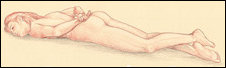 |
This position is used for a variety of reasons, sometimes as punishment. She lays on her stomach, face down and turned to the left with her wrists crossed behind her back. Her ankles are crossed, as well, as if for binding. "Belly" | |
| barbarian | a native of Earth; Also defined as slave girls captured from outlying regions or cities. Barbarian slave girls from Earth are considered shamelessly sensual. | |
| Barge Fort | The lining up of marsh barges to create a defensive fort. | |
| Barge/ River Barge | Used for crossing large rivers; pulled by river tharlarion. | |
| bargemen, Cartius | interrelated clans of fathers and sons, claiming Caste for themselves, who operate the barges that cross the Cartius River. The barges are constructed of layered timbers of Ka-la-na wood and are towed by teams of river tharlarion. Their passengers are bound for Turia. Book 4: Nomads of Gor, pages 3 and | |
| Bargemen, Caste of | Drivers of the watercraft which is pulled by the river-tharlarion. | |
Bark Cloth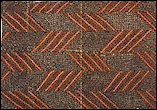 |
Cloth made from the bark of the pod tree, dyed scarlet and plaited and pounded into a cloth; often adorning the hips of slave girls in the Schendi region. | |
| Barrens | a vast tracts of rolling grasslands, lying east of the Thentis Mountains. They are not as barren as the name suggests, but perhaps the nomenclature is intended to discourage their penetration. Not as arable as the rest of Gor because of the presence of the Thentis mountains and the absence of large bodies of water. They have extreme seasonal temperatures; bitterly cold winters and long, hot, dry summers. Their climate can also include booming thunderstorms and tornadoes and blizzards in which snow can drift as high as the mast of a light galley. The grasses, shorter at it's western edge, can reach a height of several feet as one moves further east. No white man has ever penetrated to the eastern edge of the Barrens. Book 17: Savages of Gor, pages 64 - 65 | |
| Basket Harness | A harness worn by a tarn wearing a tarn basket. | |
| Basket Hitch | A knot which is used to fasten carrying baskets to hooks on specific types of tarn saddles. | |
| Basq/Basqa | Basket | K |
| Bastinado | In the history of earth, the bastinado is a thick cord, stick or cudgel, used to deliver painful blows to the bottoms of feet. It is most likely that on Gor, the slave was referring to the corded Oriental bastinado, rather than a stick bastinado. | |
| Bastion | Fortress, usually of a city. | |
| bat and ball | A game, similar to Earth's 'keep-away' consisting of two 2-man teams. It is played with a wooden bat and wooden ball. Not for the weak or wary Book 9: Marauders of Gor, page 14 | |
| Bat/Bata | Boat, Ship | K |
| ba-ta | second letter of the Gorean alphabet; corresponds to the Earth letter 'B' | |
| Bath Girl | Slave girls which serve in the public baths of the cities. | |
| Bath Oils | Oils, both course and fine, which are customarily used in the Gorean baths. | |
| Baths, Public | The public baths not only provide a clean Gorean, but are an important social aspect of Gorean life. There are several famed baths in Gor, such as the Capacian Baths. The bathing process on Gor is not simply soaking in a tub of water. There are several phases to the typical bath, fashioned after the practices of ancient Romans. | |
| Battering Rams | Large beams used to knock down walls of a fortress. | |
| Battles of Oxen | a gladiator type competition popular in Tharna; men are yoked with horns fitted to them; they battle each other in an arena, one trying to gore or maim the other. Book 2: Outlaw of Gor, page 112 | |
| Bay, Baya | mouth | K |
| Bazi | One of the coastal free port cities in the Ushindi. | |
| Bazi plague / pox | deadly, rapidly-spreading disease with no known cure; its symptoms include pustules which appear all over the body, and a yellowing of the whites of the eyes. Most likely Small Pox which devasted civilizations on Earth long ago. | |
| Bazi tea |
a heavily sugared, herbal beverage, usually drunk in three small cups | |
Bazi Tea Ceremony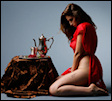 |
an online tea pouring ceremony not in the books | K |
| Bead Collar | A beaded leather collared used by the red savages of the Barrens; each bear a distinctive pattern of beading unique to mark an individual's possessions. The collars are tied closed, using a signature knot in a given tribal style. | |
| beads on a chain/ beads on a string | a reference to free women chained in a coffle, it is an oblique reference to 'slaver's necklace'. Slaves on such a necklace are referred to as 'jewels', whereas a free women is merely a 'bead'. Book 25: Magicians of Gor, page 16 | |
| Beans | Legumes of many varieties. | |
| Beast | a Kuriian military formation consisting of two Hands (six Kur) and two Eyes (leader of a Hand), is called a Beast or Kur. It's military leader is a Blood Book 17: Savages of Gor, page 22 | |
| Beasts | What the Innuit call the Kur. | |
| Beeji | (to) bite, chew | K |
| Bees, Honey | These industrious insects make delicious honey. | |
| Beetles | Standard ugly bugs. | |
| Beeyan | fur | K |
| Beheading | An ancient form of execution, often done when the offender and victim share a Home Stone; considered more humane. | |
| Belled Collar, The | A paga tavern located in Ar. | |
| Belly | She assumes a face down position, head is turned to the left, arms at her sides with the palms turned up, and legs are parted widely. | K |
| Belly Chain | A chain that it locked around a girl's waist, and which, because of a girl's wide hips, does not slip off. | |
| below deck girl | the term used for slave girls transported in the hold of a ship. They are held in individual cages and because of infestations of lice, all of their body hair is shaved; used derisively especially by those slave girls allowed to remain on deck in cages, who need not have shaved heads, though all slaves on a slaver ship are unclothed. Book 11: Slave Girl of Gor, page 318 - 32 | |
| Belt Dance | dance where the slave may not rise above the Master's belt | |
| Bena | Woman | K |
| Berries | Unspecified types of berries. | |
| Besnit | One of the major cities of slave trade. | |
| Betrothal, The | Usually performed for a high-caste betrothal, this is the procession of the bride-to-be to various cities and villages, to display the new bride, as well as the riches she brings. Also referred to as the Companion Journey. | |
bina/ kajira bana |
"slave beads" cheap jewelry for slaves, usually made of wood, glass, or bells; a common slave name | |
| Binding Fiber | A very heavy and stout twine made of strips of leather or a fiber such as hemp; used in binding slaves; can also be used to fashion a temporary collar. | |
| binding fiber belt | twine used as a belt for slave girls, also to bind the wrists several times | |
| binding strap | a strap 3/4" wide and 18" long commonly used for binding the wrists and/or ankles of prisoners and slaves | |
| bint | small, carnivorous, freshwater, fanged eel which inhabits the rivers of the rainforests inland of Schendi; a large school of bints can strip a carcass in minutes; similar to the piranha of Earth | |
| Biqma | female sex-organ (derogatory i.e.'cunt') | K |
| Black Bread | Staple bread of the galley slaves. | |
| Black Gold | The Assassin's fee is referred to as black gold, the black designating the Caste of Assassins. | |
| Black Ships | Black ships were used for their color and ease of hiding, for the transportation of such merchandise as slaves, weapons smuggled from Earth for use against the Priest-Kings (by the Kur and their agents). | |
| Black Squirrels | Pesky rodent, which lives on the ground, as well as in trees. | |
| black wine | coffee; traditionally served black or with white and yellow sugars and powdered bosk milk, and in tiny cups. | |
| Blackwyne | Comparable to coffee. A misspelling. The correct phrase is black wine | K |
| blanket | when a blanket or cloak or covering of any sort is thrown over a slave girl she may not speak or rise; she must remain silent until the blanket is lifted by a free person Book 13: Explorers of Gor, page 94 | |
| Bleachers, Caste of | Not much is said about this caste, or its trade. | |
| Blind Helmet / Iron Hood | In the games of the Stadium of Blades, often prisoners and slaves are forced to fight wearing a blind helmet, thus rendering them unable to see their opponents. | |
| blindfold | consists of two rounded pieces of soft felt, three to four inches in diameter, and the binding which is several turns of a dark thick, folded cloth, tied behind the head. The rounded pieces fit over the eyes, held in place by the scarf or tie. It is not normally used in transportation, the slave hood being preferred in those instances. Book 15: Rogue of Gor, page 20 | |
| block melodies | certain melodies commonly used in slave markets in the display of merchandise. They are intended to 'set the mood' in the mind of potential buyers. Book 24: Vagabonds of Gor, page 37 | |
| Block Name | Name given to a slave that is placed for sale on the auction block; much less confusing than numbering them. | |
| Bloketu | The term in the language of the red savages meaning summer or summertime. | |
| Blood | in Kuriian military organizations; a leader of a military unit of varying sizes and strengths depending on his rank; the smallest Unit led by a Blood is 'Kur' or 'Beast' followed by 'Band' 'March' and 'People' each unit a large multiple of the former Book 17: Savages of Gor, page 22 | |
| Blood-Nurser | A "female" form of the Kur. | |
| blotanhunka | the term for a war party leader of the red savages; he tends to be more experienced and mature, and exerts more control over the larger group. Book 17: Savages of Gor, page 249 | |
| Blubber Hammer | Hammer which is used by the Innuit to pound blubber, loosening the oil inside; can be used as a weapon of sorts. | |
| Blubber Oil Lamp | A flat, oval lamp filled with the oil derived from blubber; used by the Innuit. | |
| Blubber Oil | Oil used by the Innuit derived from the blubber of the arctic beasts of Gor; used for lamps. | |
| Blue Scimitar Tattoo | Tribal marking of the Kavar tribe worn on the forearm; the scimitar points outward, toward the foe. | |
| Blue-Sky Riders | a warrior society of the Fleer tribe of Red Savages | |
| Blue-Sky Song | a refrain from the Wagon Peoples which says in part 'though I die yet there will be the bosk the grass and sky'. Book 4: Nomads of Gor, page 263 | |
| Blunt Fin Whale | One of the varieties of baleen whales found on Gor. | |
| Bo | bow, something bent | K |
body chain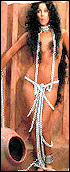 |
closely meshed length of chain about 5 feet in length which can be used in a variety of ways to bedeck or secure a slave. Some are decorated with semi-precious stones and wooden beads. Detachable lock and snap clips allow the chain to be transformed from slave jewelry to slave restraint. Book 15: Rogue of Gor, pages 71-72 Book 16: Guardsman of Gor, page 281 | |
| Body Hood | A full-body "hood" which is used to help keep the female or prisoner docile | |
| Bofuk, Bofuka | fate | K |
| Bogul, Bogula | captive, prisoner | K |
| bola | It consists of three long straps of leather, each about five feet long, each terminating in a leather sack which contains, sewn inside, a heavy, round, metal weight. It was probably developed for hunting the tumit, a huge, flightless carnivorous bird of the plains, but the Wagon Peoples use it also, and well, as a weapon of war. Thrown low the long straps, with their approximate ten-foot sweep, almost impossible to evade, strike the victim and the weighted balls, as soon as resistance is met, whip about the victim, tangling and tightening the straps. Sometimes legs are broken. It is often difficult to release the straps, so snarled do they become. Thrown high the Gorean bola can lock a man's arms to his sides; thrown to the throat it can strangle him; thrown to the head, a difficult cast, the whipping weights can crush a skull. One entangles the victim with the bola, leaps from one's mount and with the quiva cuts his throat. (Nomads of Gor, book iv, page 24) | |
| Boleto | A well-known winegrower of Ar, producing "a large number of reasonably good, medium-grade ka-la-nas." - Mercenaries of Gor, page 360. Including Boleto's Nectar [of the Public Slave Gardens] | |
| Bond Girl | Term in the villages for a slave girl. | |
| bondage knot | a knot, tied by a slavegirl in her hair on the right side of her face; it is a silent plea to her master that she be raped; If a Master ties the knot himself, notably during a time of battle, it is his way of marking the girl as taken if he must continue on, leaving her bound behind. Book 10: Tribesmen of Gor, page 27 and 321 Book 22: Dancer of Gor, pages 299-300 | |
| Bondage Knot | This particular knot is a formed of a woman's hair on the right side of her face just above her right shoulder; it can be a plea of attention for that of a master, as well as an indication of ownership being claimed; the knot is made in her. | |
| Bondage March | The march of slave girls in a coffle line. | |
| Bondage Strings | The collar of the Innuit. | |
| bond-maid | a slave in Torvaldsland | |
| bond-maid circle | a female who enters the circle, drawn in the dirt for example, is declaring herself a bond-maid by the laws of Torvaldsland. She may enter voluntarily or be thrown into it bound and naked. Book 9: Marauders of Gor, page 44 | |
| bond-maid gruel | A porridge eaten by bond-maids in Torvaldsland; made of dampened Sa-Tarna meal and raw fish. | |
| Bones/Bone Gambling | a game played with pieces carved from bones that are shaped to resemble an animal; a bone is dropped from a players hand and the bone which remains upright is the winner. Book 12: Beasts of Gor, page 185 | |
| Bonti | (to) show mercy, allow (Bonti Parabis:to let live) | K |
| Bordani | need to drink, (to be) thirsty | K |
| bosk | large, shaggy, long-horned bovine similar to the Earth cow; cattle | |
| Bosk Whip | A light, one-bladed whip generally used to lead bosk; also can be used to switch slaves. | |
| Boski | Drive | K |
| Boswell Pass | The pass is the gateway to the Barrens, the home of the red savages. | |
| Bota/ Skin Bag | a bag with a reclosable stopper or cork commonly made of verr skin leather; used to transport liquids and is often utilized by serving slave girls especially in the camps Book 7: Captive of Gor, page 112 Book 10: Tribesman of Gor, page 36 Book 22: Dancer of Gor, pages 428 and 429 | |
| Botna | Available | K |
| Bound by the Master's Will | The slave will stand, sit, kneel, with hands and ankles positioned as instructed by the master, as if she were truly bound by fiber or chains. | |
| bow, horn, of the Innuit | bow formed with split pieces of tabuk horn, bound with sinew which is not effective beyond thirty yards, used in the land of the Innuit to hunt tabuk on the tundra. Book 12: Beasts of Gor, page 205 | |
| bow, horn, of the Wagon People | favored by the Wagon peoples, it hangs from their saddles. It does not have the range or force of the more powerful long bow or cross bow, but it is a fearsome weapon at close range. The young men of the Wagon Peoples are not given a name until they have mastered the bow, the lance and the quiva. Book 13: Nomads of Gor, pages 11 and 66 | |
| bow, long | the Gorean long bow is the height of a tall man. It has a flat back and a round belly and may be made of supple Ka-la-na wood. A proficient bow man should be able to loose 19 arrows in a Gorean ehn. It is not as popular among Goreans because of some impracticalities of use. It cannot be used from the saddle, and the warrior must be standing or kneeling to aim, making him a target. It is favored by the peasants who make them and is also known as the peasant bow. Book 6: Raiders of Gor, pages 2 and 3 Book 22: Dancer of Gor, page 303 | |
| bow, ship | short stout maneuverable bow, easy to use in crowded quarters easy to fire across the bulwarks of galleys locked in combat. Book 15: Rogue of Gor, page 30 | |
| Bracelets | This position is used to put on slave bracelets for chaining the slave. A common place to chain slaves is to their Master's bed or at a Tavern there are rings in the walls that a Master may use to attach a slave to while he goes about his business. She places her hands behind her back....her shoulders pushed back...her breasts thrust outward....and her hands clasped tightly behind her back...ready for bracelets to be placed on her. | |
| bracelets, hook | leather cuffs with locks on them and snaps; they are soft and the snaps require no key. Some men enjoy them on their slaves; by means of the straps the girl may be variously secured by the locked cuffs Book 11: Slave Girl of Gor, page 297 | |
| Brahka | Broccoli | K |
| Brail Rope | Rope used in the common lateen-rigged Gorean galley to raise the sail to its yard, to be secured there, or lower the sail to open it to the winds. Lateen rigging (a single, triangular sail) is preferred because of the excellent maneuverability lateen rigging provides. | |
| brail | 1. One of several small ropes attached to the leech of a sail for drawing the sail in or up. 2. A small net for drawing fish from a trap or a larger net into a boat. | |
| Brailed/ Brailing/ Brails | 1. To gather in (a sail) with brails. 2. To haul in fish with a brail. | |
| brak bush | a shrub whose leaves have a purgative effect when chewed; traditionally, branches of it are nailed to house doors during the Waiting Hand to discourage the entry of bad luck into the house for the New Year | |
| Braks, Braksa | well, okay, fine, healthy | K |
| Branch Shackle | A shackle made of a thick, rounded branch, approximately eighteen inches (18") long; used in the forests when metal shackles are not available. | |
| brand | a mark burned into the flesh of animals and slaves to mark them as property; specific brands include the kef (common kajira brand), Dina, Palm, mark of Treve, mark of Port Kar, mark of the Tahari, mark of Torvaldsland (a girl whose belly lies under the sword), Tuchuk brand of the 4 bosk horns | |
| brand, penalty | small 1/4" brands that mark a convicted liar, thief, traitor, etc. | |
| brand, thief's | tiny 1/4", 3-pronged brand worn on the cheek of those of the Caste of Thieves | |
| Branding Log | Large peeled log upon which slaves are secured to be branded. | |
| branding rack | a device to which a new slavegirl is chained for branding; her hands are chained above her head, but the rest of her body is free to move, except for whichever thigh is to be branded, this being held motionless in a large vise | |
| Brat/Brata | Cape, Cloak, Coat, Mantle | K |
| Bratach, Bartacha | Banner, Flag | K |
Brazier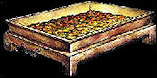 |
A heavy pan used for burning coals, covered by a grate so as to cook foods, etc. Much like the modern Hibachi | |
| Breaking a Well | In almost inconceiveable crime of destroying a well in the Tahari, in an oasis. | |
| Breath Feathers | Tail feathers from the base of the herlit's tail; called "breath feathers" probably because when a breeze blows through them they appear to be alive. | |
| Breeding Case | Breeding cases found in the vivaria, which are utilized to breed Muls in the Nest of the Priest-Kings. | |
| breeding cell; breeding stall | A slave who is designated to be bred is taken there. Both kajira and kajirus are hooded and though they will never know the other's identity their coupling is public, observed by Masters and others. Book 22: Dancer of Gor, page 175 | |
| Breg/Brega | A Break, A Crack, A Split | K |
| Bregi | Break, Rupture | K |
| Broad Headed Arrow | Tuchuk war arrow; also called a barbed arrow. | |
| Brundisium | one of the largest and busiest ports of Gor and a commercial metropolis, it is 100 pasangs south of the Vosk Delta on the Thassa. The Genesian Road links it with other coastal cities. Brundisium served as the staging point for the Cosian invasion of Ar. Book 21: Mercenaries of Gor, page 38 Book 22: Dancer of Gor, pages 101 and 147 Book 24: Vagabonds of Gor, page 19 | |
| Brush Urt | One of the many varieties of rodents. | |
| Buckler | Small, round shield. | |
| Builder's Bend | One of the many simple, common Gorean knots. | |
| Builders Caste | the caste which includes architects, draftsmen, stonemasons, etc.; the Builders are one of the five High Castes included in the government of Gor; their caste color is yellow | |
| Builders Glass / Glass of the Builders | Telescope | |
| Builder's Overhand | One of the many simple, common Gorean knots. | |
| Bun/Buna | Bunny, Rabbit | K |
| Burnoose | The sleeveless, hooded cloak worn by the tribesmen warriors for ease of use of their weapons while riding the kaiila. | |
| buttons | a 'recent' innovation for slave attire, not used on the garments of Freepersons. Most garments are fastened with hooks, pins or brooches. Buttons are considered rather sensuous on Gor. Book 11: Slave Girl of Gor, page 417 | |
| Buy Me Master | Ritual phrase slave girls that are for sale are required to speak. |