Gorean Glossary F-G
Gor is a complex lifestyle based on a series of novels by John Norman featuring a strict caste system of highly trained Free and slaves. For more information, check out the Garden's section on Gor.
Note about this Glossary: items marked with a K are Kassar or Old Gorean, online-created languages used to augment Gorean. Kassar was not created or endorsed by John Norman and is not consistent within the Gorean language or universe. Kassar should be used cautiously and sparingly as many Goreans do not use or approve of the language.
| Face-Strip | The act of removing the veils worn by a free woman, either done voluntarily by the woman, or by force by a free male. It does not always mean the woman will be enslaved if she is face-stripped. Often this is done to humiliate a free woman, reminding her that even she is free at the whim of a man. | |
| Faction Color | In the tarn races, colors are assigned to teams of rider and tarn, thusly becoming their racing name. Interesting is the definition of "faction:" | |
| Faction Cot | Tarncots for the different factions (teams) at a tarn race. Built differently than the usual tarncot. | |
| Faction Patch | Patches that are worn by frees to display for which team one is favoring to win; a bet marker of sorts. | |
| Fad/Fadi | Cut, Wound, hurt | K |
| fadu | vagina | K |
| Fafta | idea, thought, concept | K |
| Fageen | a whip | K |
| Fageeni | (to) whip, beat | K |
| Fahgan | Discipline, Rule, Order | K |
| Fahgi | (to) obey | K |
| Fahm | Between, In The Middle Of | K |
| Fair of En'Kara | One of the four great fairs of the Sardar; held in the spring of each year. | |
| Fair of En'Var | One of the four great fairs of the Sardar. | |
| Fair of Se'Kara | One of the four great fairs of the Sardar. | |
| Fair of Se'Var | One of the four great fairs of the Sardar. | |
| Fair-Weather Sail | Sail used on Gorean ships during gentler weather conditions. | |
| Falarian | an exquisite, rare, fabulously expensive wine, it's cost would purchase a city. It's existence is only rumored among collectors. Book 21: Mercenaries of Gor, pages 158-159 | |
| falarina | a female who is no longer a virgin or 'glana' preceded by the state of 'profalarina' indicating a female who is about to be 'falarina' and before that by 'meta glana' one who looks forward to her deflowering. Book 17: Savages of Gor, page 203 Book 22: Dancer of Gor, page 128 | |
| Farnacium | One of the exchange islands located in the northern portion of Gor. | |
| Fasalee | Beans, Seeds, Nuts | K |
| Fav, Fava | knife | K |
| Feast of Tola | Anniversary of the Nuptial Flight. One of the three celebratory feasts of the Priest-Kings. | |
| Feast of Tolam | Feast of the Deposition of the First Egg . One of the three celebratory feasts of the Priest-Kings. | |
| Feast of Tolama | Celebration of the Hatching of the First Egg. One of the three celebratory feasts of the Priest-Kings. | |
| Feast Steward | Headwaiter/valet of large feasts, such as is held in Turia. | |
| Feasting House | The central eating area for the Innuit, where everyone gathers to share songs, partake of meals and seek warmth and company of others. | |
| Fee Cart | A public or rented "coach" for the transportation of passengers, often slung on layers of leather (in effect: shock absorbers) to give a more comfortable ride. It seems free women, however, are the most commonly afflicted with motion sickness in these coaches. | |
| Fel'u | Complaint/s | K |
| Fer, Fera | mistake, error | K |
| Fermented Milk Curds | An alcoholic beverage of the Wagon Peoples. | |
| Fermi | Accept As Proven, Believe From Fact | K |
| Ferns | Tropical plant. | |
| Festal | A shrub. | |
| Field Gate | The entrance/exit gate of a city leading to the fields. | |
| Field Slave | Slaves, male and female, who provide manual labor in the fields. | |
| Field-Light Camouflage | Type of camouflage developed by the agents of the Kur to make their ships appear invisible. | |
| Fieta | Annoy | K |
| Fighting Hearts | see All Comrades | |
| Fij/Fija | Button, Fastener, Closing Device | K |
| Fiji | (to) fix, repair, restore, make new, sharpen | K |
| Filimbi | An inland word which means "flute." | |
| Finch | A bird of the rainforests. | |
Finger Cymbals/ Zills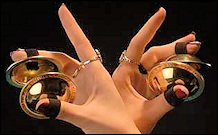 |
Finger cymbals, small metal disks, worn on fingers and played by kajirae while performing a dance. | |
| Fire Bowl | A bowl of sorts, made of copper, with brass and copper gratings, or just brass grating, used by the Wagon Peoples to build fires inside the wagons; used for heat mostly. Fire bowls are also used by the various tribes of the Ushindi region. | |
| Fire Swallower | Entertainer that seemingly swallows fire. | |
| fire-maker | a small device consisting of a small reservoir of tharlarion oil, a wick, a thumb-activated, ratcheted steel wheel, and a splinter of flint; not unlike an old-fashioned cigarette lighter | |
| first girl | slave appointed by the Master to oversee other usually younger or less experienced girls; she rules when FreePersons are not present as the Master, but she is subject to his total authority. Book 13: Explorers of Gor, page 78 Book 17: Savages of Gor, page 231 Book 22: Dancer of Gor, page 170, 211, and 380 Book 25: Magicians of Gor, page 123 | |
| First Killing | a term used by the assassin guild to indicate that they are going to kill somebody for somebody else. | |
| First Kiss of the Captive Slave Girl | The first kiss bestowed upon a free male by that of a captive slave girl; generally the girl chooses a particular master that catches her eye as it is symbolic of submission. | |
| First Knowledge | the education available to the lower castes, such as the Peasants; it is practical, if occasionally deliberately erroneous (i.e. it purports that Gor is a flat disk) | |
| First Oar | The one who sits at the first oar (thwart) of a ship. His endurance and strength is greater than any other of the oarers. | |
| First Perch | The perch of the winning tarn at a tarn race. | |
| First Spear | A term used for a member of a larl hunting group (usually from Ar), the first in a file, usually the best spear thrower of the group. He is the first to throw his spear at an attacking mountain larl, then he drops to the ground and covers himself with his shield. This allows the next member a clean throw at the beast. | |
| First Stake | The Wagon Peoples, along with the residents of Turia, celebrate the Love War. The first stake for each faction (i.e, Tuchuk, Kassar, Turia) is reserved to hold the woman deemed by that faction to be the most beautiful, and thus the most valuable. | |
| First Sword | the leader of the Guards in a given city such as Ar. Book 4: Nomads of Gor, page 12 | |
| First Wagon | To belong to the household of the Ubar of the Wagon People; this can include several wagons. | |
| Fish Paga | made of fermented fish which is akin to Earth's Saki, made by the people of the Sea. | K |
| Fisherman | The name given to an arena combatant who fights with the net and trident, tools of the fisherman caste. | |
| Fisherman, Caste of | A sub-caste of the peasants which make their living sometimes commercially fishing, as well as fishing for individual family. | |
| Five Rings, The / Invisibility Rings | Prasdak of the Cliff of Karrash created five rings that allowed a Kur to become invisible. The ring is a heavy, gold ring set with a tiny square of silver. If the bezel is turned inward so the silver faces inward, the wearer sees a circular switch that will turn the wearer invisible and the wearer sees everything in a red light. The ring is a light diversion device that encircles the wearer in a field. | |
| Flags of Division and Acquisition | Flags utilized by pirates, and perhaps other raiders, to make known to another ship (or ships) of intent to claim their ships and goods. | |
| Flagship | The first ship in a line of ships. | |
| flahdah | a tree of the Tahari having lanceolate leaves; the trunk leans, like that of a palm tree | |
| Flame Death Mechanism | Housed in the Scanning Room in the Hall of the Priest-Kings, this device is used to put into effect the dreaded Flame Death. | |
| Flame Death/Blue Flame of Death | a form of capital punishment imposed by the Priest-Kings and triggered from the Sardar; in it, the victim seems to spontaneously erupt in blue flames | |
| Flame Lock | Combustive material which is placed on inanimate objects, such as envelopes, to self-destruct at a pre-set time. | |
| Flame Opal | A reddish and blue gemstone; all opals on Gor very rare and valuable. | |
| flaminium | a largish scarlet flower having 5 petals | |
| Flavored Ices | A drink of crushed ice, flavored probably with juices. | |
| Fleer | a tribe of Red Savages which inhabits the Barrens | |
| fleer | large, hook-billed bird which hunts at night | |
| fleer, prairie | yellow bird with long wings and a sharp bill; sometimes called the 'maize bird' or 'corn bird' from the belief that it is usually the first bird to find food | |
| Flight Arrow | A specialized arrow used with the long bow for long distance shooting. Drag on the shaft is overall a benefit as it increases the vertical component of the total drag on the arrow (which a flight arrow is designed to maximize). A good hunting arrow. | |
| Flight Track | The racing track set up for the much-enjoyed tarn races. | |
| Floor Master | The bouncer of the paga taverns. | |
| Flute | A musical instrument. | |
| Flute Girl | Slave girls which are required to play the flute as part of their duties; usually to harass male slaves to incite to work or to help drive someone from the city. Known in ancient Greece as "Hetaira." | |
| Flying Bridges | Platforms that are built to connect as a temporary bridge the outer and inner walls of a city; used as a military tactic. | |
| Fon | At, To, Toward, On | K |
| foot | measurement - 10 horts or 12.5 earth inches | |
| Fora / fori | Chain (pl) chains | K |
| Forest Hurlit | One of many birds found on Gor; migratory. | |
| Forest Panther | A species of wild cat | |
| Forest People | Those people of the forest who make their living by selling trees; not to be mistaken with the Forest Girls, or Panther Girls. | |
| Forest Preserves | Yes, even on Gor, there is a concern for the protection of vital environmental commodities such as trees. | |
| Forest Sleen | One of the several species of sleen. | |
| Forest Urt | One of the many varieties of rodents. | |
| Forestport | One of the river townships along the Vosk River. | |
| Fori | (to) ask, beg, (Fori Ma -when said by wench or slave, means "please") | K |
| Fori Ma | Begging For Release | K |
| fori/neshuk | please | K |
| Fort Haskins | Boswell pass, bordered by the southern edge of the Thentis Mountains and the northern range of the Voltai, opens into The Barrens, the world of the Red Savage. Fort Haskins is situated at the foot of the pass. Once a trading post maintained by the Haskins Company and later a military outpost flying the flag of Thentis, it's military and strategic influence declined with the development of the Thentesian Tarn cavalries and the growth of the population. It is once again a trading center, maintained by the Caste of Merchants of Thentis. Book 12: Savages of Gor, pages 76-77 | |
| Fortified Camp | Military encampments found every forty (40) pasangs along large military roads that provided provisions to the troops on a march; often these became permanent holdings. | |
| Fortress of Saphronicus | City on Gor which was attempting to join with the Salerian Confederation. | |
| Forty Maidens, Tavern of | The largest and most opulent paga tavern in Port Kar. | |
| fountain | higher bowl- the portion of the public fountains from which free persons drink. The lower level is available for the use of animals and slaves. Slaves caught drinking from the upper bowl face punishment by the magistrates of the city. Book 25: Magicians of Gor, pages 216, 217, and 224-225 | |
| Four Chains | A popular variation arrangement of chains placed upon slave girls. | |
| Four Chains, The | One of the paga taverns of Port Kar. | |
| Four-Strap | One of the six (6) leather reins used in guiding a tarn. Tarl Cabot was able to teach his tarn to respond to verbal strap commands. | |
| Frame of Humiliation | wooden frame to which the condemned person is tied before it is set adrift in the Vosk River, so that he may die of exposure and/or dehydration, if he is not eaten by tharlarion or other carnivorous reptiles | |
| Francisca | Alar war axe, single-bladed and heavy. | |
| Free [Form] Dances | This refers to various dances which have no fixed-form, and are created by the slave girl depending upon the situation. | |
| Free Companion | spouse, consort, Free Companionship must be renewed annually | |
| Free Holding | A holding claimed independently of a city or village; the Home Stone of the free holding is generally placed in the hut of the holder. Commonplace amongst the Peasant Caste. | |
| Free Keeps | Keeps which are maintained by the merchant caste, but without specific municipal affiliations. These keeps are rented on a commercial basis. The malls of Gor. | |
| free labor, citizenship | In the cities, the rights of citizenship are clearest and free labor has held its own. In rural areas which fall outside the sphere of influence of nearby cities, it is difficult to be a citizen of a city if one cannot reach it within a days march. Retention of citizenship may be contingent on such things as attending public ceremonies, such as an official semi-annual taking of auspices, and participating in numerous public assemblies, some of which are called on short notice. The inability of the rural inhabitants to effectively exercise citizenship leads to disenfranchisement, or most often a fierce independence, repudiating allegiance to anything save one's own village. The farmers, or peasants, are more likely to suffer from the results of cheap competition than their urban brethren. Book 22: Dancer of Gor, pages 302-30 | |
| Free Ports | Ports administered by the caste of Merchants which free up the hassles associated in dealing with port officials and the taxations on goods, allowing a "free" movement of merchandise. | |
| Free Woman | On Gor a woman normally travels only with a suitable retinue of armed guards. Women, on this barbaric world, are often regarded, unfortunately, as little more than love prizes, the fruits of conquest and seizure. Too, often, they are seen less as persons, human beings with rights, individuals worthy of concern and regard than as potential pleasure slaves, silken, bangled prisoners, possible adornments to the pleasure gardens of their captors. There is a saying on Gor that the laws of a city extend no further than its walls. Outlaw of Gor - Book 2 pg 50 | |
| Freeboard Area | The distance between the waterline and the main deck of a ship. | |
Frevet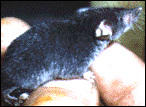 |
A rather small, quick, mammalian insectivore that is often kept in insulae for insect control. | |
| Frobicain | A drug administered by injection. | |
| Frod | Birth | K |
| Frodkali | (to) massage | K |
| Frodki | Born | K |
| FrodNash | birthday | K |
| fruit tindel | a bird which inhabits the rainforests of the Schendi area | |
| Fuk/Fuka | Deep | K |
| Fulvians | Foothills of the Voltai Mountains, northeast of Ar; home to the villa districts. | |
| Fum/Fuma | Brown, Earth Tone, dirt | K |
| Fungus Chambers | In the Nest of the Priest-Kings, these are dark chambers in which Mul-Fungus is grown on Fungus-Trays and tended by Fungus Growers. They employ the use of Mul-Torches to see. | |
| Fungus-Growers | Muls whose responsibilities are to grow the fungus which is the principal food of the Priest-Kings, as well as Muls. | |
| Fungus-Knife | Wooden bladed knife in which is used by Muls to cut Mul-Fungus. | |
| Fungus-Mallet | Wooden headed mallet in which is used by Muls to press Mul-Fungus. | |
| Fungus-Trays | Trays on which Mul-Fungus is cultivated by the Fungus-Growers in Fungus Chambers. | |
| Fur/Fura | Bath | K |
| Furab/Furaba | Bathroom | K |
| Furring | To have sex | K |
| Furs of Love / Love Furs | These are soft furs spread thickly on the floor at the foot of a master's sleeping couch, on which a slave girl is most often raped. | |
| Ga | Go | K |
| Ga va shiva | Go in Peace | K |
| gag | heavy, rolled-leather wadding thrust back behind the teeth, over the tongue of a slave, secured in place by a broad, mouth-covering strap, with three smaller straps attached to it. Book 22: Dancer of Gor, page 271 | |
| Gag Law | A command often utilized whenever guards use slave girls; the girl is forbidden to speak, save for whimpering and moaning. | |
| Gah | Ache, Dull Pain | K |
| Galley | John Norman uses this term generally in reference to the ram-ships of Gor, however he has on occasion used the term galley in reference to a smaller boat. | |
| Galley Slaves | Generally male prisoners which labor as oarmen in the galleys of ships. | |
| Game of Favors | a game played by Free Woman at the Carnival where each woman is given ten scarves and must run about asking for the men to accept her favor; the goal to be the first to get rid of the scarves and run back. Book 20: Players of Gor, page 44 | |
| Games of Love and War / Love War | The games in which warriors of Turia compete against warriors of the wagons peoples; the prizes are women. | |
| Gaming Rooms | Establishments in a city in which Kaissa, and other forms of wagering games are played. | |
| gant, jungle | a bird, related to the marsh gant, which inhabits the rainforests inland of Schendi | |
| gant, marsh | a long-legged marsh bird with a piping cry; similar to a curlew | |
| garbage death | the death for a slave where a slave is bound naked, and thrown to canal urts, as in Port Kar. Book 10: Tribesmen of Gor, page 313 | |
| Garlic | Great for Warriors' blood pressure. | |
| Garrote | An instrument of execution, rather than a weapon. | |
| Gazj/Gazja | Bread | K |
| Gazjis | Baker | K |
| giani | a large mammal of solitary habits which inhabits the rainforests inland of Schendi | |
| Giant Urt/ Pack Urt | Extremely large, aggressive rodent that lives in packs | |
| gieron | a drug, an allergen, which causes a yellowing of the whites of the eyes; in combination with sajel, it reproduces the symptoms of the Bazi plague | |
| gim, horned | a small owl-like bird, c. 4 ozs. in weight, which inhabits the forests of northern Gor | |
| gim, lang | an insectivorous bird which inhabits the rainforests inland of Schendi | |
| gim, yellow | a bird, related to the horned gim, which inhabits the rainforests inland of Schendi | |
| gint | a tiny (6") freshwater fish which inhabits the rivers of the rainforests inland of Schendi; it has bulbous eyes & flipper-like fins; is amphibious, having both lungs & gills; is capable of walking on its pectoral fins; often found in the company of tharlarion, feeding off the scraps of their kills | |
| gint, giant | a large cousin of the gint found in western Gor, similar in appearance, but with a 4-spined dorsal fin; is also amphibious and capable of walking on its pectoral fins | |
| Gir Hesa | Bond Friend | K |
| Gir/Gira | Ax, Any Heavy Cleaving Tool | K |
| girl capture chain | short chain used specifically to capture without serious damage; similar to the garrote in use but with chain in place of thin wire. Book 17: Savages of Gor, page 180 | |
| girl catch | a contest to settle disputes where young women free and slave are captured by the opposing village within a boundaried area. Book 12: Beast of Gor, page 41 Book 25: Magicians of Gor, page 40 | |
| girl-yoke / Northern Yoke | a narrow piece of wood c. 5' long with holes drilled in the middle and at each end; to secure a girl in this yoke, a thong is tied around one wrist, the end of the thong then being passed through the hole in one end of the yoke; the thong is then passed through the middle hole of the yoke, wrapped around the girl's neck 5 times, then passed back out through the same hole, after which it is passed through the hole at the other end of the yoke, so that her other wrist may be tied to the yoke; shorter (2 1/2' long) versions are sometimes used while the girl is serving her master's pleasure; used mostly among the Red Savages of the Barrens | |
| Girth Cloth | Used by tharlarion breeders to wrap newly hatched tharlarions as they hatch from their eggs to avoid burning on the hot sand. | |
| Gitch | Biting Insect often found in insulae. | |
| Gladius | Latin for "sword." | |
| Glana | A term which denotes the state of virginity of a female. | |
| Glave | Light, bladed poles used by slaves on barges to cut through the marshes. Possibly John Norman created this word from the Latin word glaive. | |
| Gliding Urt | Inhabits the rainforests inland of Schendi; much like a flying-squirrel. | |
Goat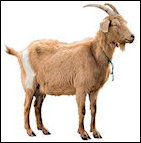 |
Possibly the verr, but John Norman specifically uses the word "goat." | |
| Goat Keeper | One who tends the goats. | |
| Gob, Goba | beak, snout, mouth (There is a joke that a Goba is much bigger than a Gob) | K |
| Gohas/Gohasa | Breakfast | K |
| Gold Tarn Disk | This coin, made of gold, is generally worth about ten (10) silver tarsks (of one of the high cities, such as Ar). | |
| Gold Wire | Export from Tor, sold in rolls. The Paravaci used gold wire to display their treasures. | |
Golden Beetle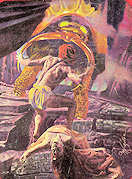 |
an insect, roughly the size of a rhinoceros, which lives in the caverns below the Nest of the Priest-Kings in the Sardar Mountains; its prey is the Priest-Kings themselves | |
| golden eating prong | an eating utensil used in Turia, it has a single tine. Book 4: Nomads of Gor, page 83 Book 12: Beasts of Gor, page 21 | |
| Golden Mask | This mask, made of pure gold, was once worn by Lara, Tatrix of Tharna, before the rebellion. Lara since abolished the wearing of masks by free women. | |
| Golden Slash of the Messenger / Messenger Mark | Messengers are distinguished by a golden slash/mark on the left temple of their helmets. | |
| Golden Sphere | This sphere was sought by Saphar and nearly cost the life of Tarl Cabot, thusly becoming the object of Tarl Cabot's interest while he was living amongst the Wagon Peoples, in his search for the last egg of the Priest-Kings, which was hidden in the camp of the Tuchuks. This sphere was mistakenly thought by Saphrar to be of extreme value, and mistakenly thought by Tarl Cabot to be the last egg of the Priest-Kings. However, it was later discovered that this golden egg was nothing more than a tharlarion egg painted gold by the Tuchuks, making it an apt decoy from the real egg. | |
| Gor | Home Stone | |
|
Gordian Knot
|
A style of a complex knot; of Earth fame, Alexander the Great sliced such a knot with his sword, thusly sealing his fate. | |
| Gorean Language Learning Device / Language Learning Machine | Developed by the Priest-Kings, after the Nest Wars this device was used to help humans that lived in the Nest learn Gorean, in a matter of an hour. The machine induces sleep; while in the sleep-state, messages are sent to the brain and are "learned." No particular name is given to this machine. | |
| Gorean Lock | The Gorean is known for his intricacy in everything, including knots and locks. There are many forms of Gorean locks, such as the Pin-Tumbler Lock, the Knife Lock, the Combination Lock, the Padlock, the Disk Lock, the Poison Lock and the Pit Lock. | |
| Gorean love bow | a girl is arched backward and bound over an object for usage exposing her fully to the Master. Book 9: Marauders of Gor, page 261; This bow is not a slave position to be assumed by the slave, but a position a slave is bent into by the Master. This word is not "bow" as in to bend forward from the waist, but the shape of an archer's "bow". | |
| Gorean Map | At times in the books, John Norman makes note that there are very few maps of Gor. Of those that exist, however, the directional values are the same, moving in a clockwise direction. | |
| Gorean Master | The Free Male of Gor; often owning slaves for labor and pleasure. | |
| Gorean Midnight | The last Ahn (hour) of a full day/night cycle. | |
| Gorean Month | Commonly, the Gorean month consists of twenty-five (25) days, five (5) five-day weeks; there are twelve (12) Gorean months in a year. | |
| Gorean Oar | Used to propel the mighty ships and boats that sail the Thassa. | |
| Gorean Pear | No mention is made in the books as to the nature of the plant life which bears a yellow fruit; most likely a tree. | |
| Gorean Phalanx | Military tactic which became obsolete for the most part with the introduction of the Torian Squares. | |
| Gorean Pike | A small carnivorous river fish. | |
| Gorean Plum | No mention is made in the books as to the nature of the plant life which bears a fruit by this name. | |
| Gorean Salute | The Gorean salute is performed by lifting the right hand, palm facing inward. | |
| Gorean Script | The manner in which the language is written. | |
| Gorean Shark | Many varieties of this carnivorous fish, found in both the sea and the rivers. | |
| Gorean Shaving Knife | For removing unwanted facial hair; small, straight-bladed knife. | |
| Gorean Short Sword | A short sword | |
| Gorean Slave Whip | The five bladed whip used to discipline slaves. | |
| Gorean Spear/War Spear / Thrusting Lance | Favored weapon of tarnsmen; long, thrusting weapon which is also thrown. | |
| Gorean Stone | A unit of measurement equal to four (4) earth pounds. | |
| Gorean Surrender | On Gor, should one give up the battle, or surrender, he would break his shield straps and the shaft of his spear, thus indicating that he is disarming himself, and placing himself at the mercy of the victor. | |
| Gorean Truce | A putting aside of weapons, halting a battle to request a military parley or conference, the one calling the truce placing his shield and spear at his feet. | |
| Gorean Week | Commonly, the Gorean week consists of five (5) days; five (5) five-day weeks in a Gorean month. | |
| Gorean Weight | A unit of measurement; ten (10) Stone equal one (1) Weight. | |
| Gorean Year | Commonly, the Gorean year consists of twelve (12) twenty-five (25) day months. | |
| Gorm/Gorma | Blue, Sky Color | K |
| Gort | Hook-billed bird of the rainforests. | |
| Gost, Gosta | snake, serpent | K |
| Gosti | slither | K |
| Gotra | useless | K |
| Gotri | Destroy, Make Useless | K |
| Gourds | Unspecified gourds; mention of the gourd in the following quote sounds like a type of yellow squash. "Then she took a long draught of water from a yellow, curved gourd... she put the plug, carved from gourd stem, back in the gourd, and replaced it in the corner." - Raiders of Gor, page 34. | |
| Grain Basket | Large baskets found in marketplaces in the Tahari which hold grain for sale. | |
| Grain Cylinder | Silos which store vast amounts of grains. | |
| Grain Scale | Scales used to weigh grains. | |
| Granting Quarter | The Gorean practice between warriors, during a death-dual, in which the one who is the obvious victor, grants quarter, or, offers the other a chance to give up the battle, by gesturing to the ground with his weapon. If his opponent accepts quarter, he will then lay his weapon on the stones of the victor's feet. Such for a warrior to accept quarter, is seen as disgrace in the Codes of the Warriors. | |
Grasshoppers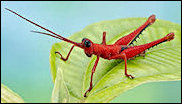 |
Hopping pests; on Gor a red variety is found. | |
| Gratis Blow / Last Blow/ Mnemonic Blow | The final strike of a whip during a slave's initial whipping to remind her that she is a slave. | |
| Gravitationally Resistant Metal | Special metal created by the Priest-Kings. | |
| Gray Robe | A robe laid atop several rugs, on the highest hill, where the Ubar sits. The Tuchuk dais. | |
| Grease Bucket | A narrow, cylindrical bucket that serves as common accessories for wagons of Gor. | |
| Grease Marking Stick | A grease pen; used at sales of animals. | |
| greased wineskin | item used in a carnival-type game that entails a Free Man balancing ,for an allotted time, usually an ehn, on a filled wineskin that has the surface greased. Many times the prize is the full wineskin. Book 25: Magicians of Gor, page 36 | |
| Great Block, The | The auction block which means, to a slave girl, being sold to great wealth and a luxurious life. | |
| Great Bow | Favored weapon of the peasants, a large, heavy bow made of Ka-la-na wood, with bow-string of hemp and silk. | |
| Great Dance | The pole dance is performed by young men of the red savages in which he demonstrates his manhood, and thusly his worth to be a man and have a wife. | |
| Great Staff | Another favored weapon of the peasant-folk. | |
| Green | Not only the caste color of the Physicians, but to mariners, green is a color associated with the pirates of Gor. | |
| Green Tarn, The | Paga tavern in Ar. | |
| Green Ubar | Famed racing tarn of Ar; brought out of retirement, he died in a race during the fall of Cernus. | |
| Greens, The | Racing (tarn) faction in Ar. | |
| greetings | common expression used by Goreans in salutation and recognition. Book 6: Raiders of Gor, page 153 Book 7: Hunters of Gor, page 62 Book 10: Tribesmen of Gor, page 253 Book 12: Beasts of Gor, page 196 Book 16: Guardsman of Gor, page 141 Book 21: Mercenaries of Gor, page 444 Book 22: Dancer of Gor, page 309 | |
| gres | upon | K |
| Gretuk | Fear | K |
| Ground Urt | This rodent inhabits the floor of the rainforests inland of Schendi. | |
| Ground Zone | Literally, the floor of the rainforest. This ecological zone extends from the ground to the lower canopies, approximately sixty feet (60') in height. It is home to a great variety of reptiles, insects, mammals and birds. | |
| grub borer | an insectivorous bird which inhabits the rainforests inland of Schendi | |
| grunt | a large, carnivorous, salt-water fish which inhabits Thassa; is often attracted by the blood of a wounded creature; similar to the shark of Earth | |
| grunt, blue | a small, voracious, carnivorous freshwater fish, related to the Thassa grunt; like its larger cousin, it is attracted by blood | |
| Guernon Monkey | Found in the rainforests. | |
| gunni | training devices used by arena fighters which consist of lead weights with handles, each weighing about the same as a sledge hammer. They are held during training for muscle strengthening. Book 14: Fighting Slaves of Gor, page 239 |
|
| Gur | a thin, white honey-like liquid secreted in the Nest by a large, grey domesticated arthropod which feeds on Sim plants; when fermented in the social stomachs of somnolent Priest-Kings, it is ritually fed to the Mother of the Nest on the Feast of Tola | |
| Gur Carriers | mutated Muls who can climb walls and who gather the fermented Gur for the Feast of Tola | |
| Gur Ceremony | During the Feast of Tola, the ceremony performed by the Priest-Kings of feeding Gur to the Mother of all Priest-Kings. | |
| Gur/Gura | Drum | K |
| Gurdo | The layered, ventral membrane which is shielded by porous plating, which is common amongst many of the marine predators of Gor. | |
| Gwana Qwastiki | What is this shit? What the shit is going on? | K |
| Gwari | (to) hunt | K |