Gorean Glossary M-O
Gor is a complex lifestyle based on a series of novels by John Norman featuring a strict caste system of highly trained Free and slaves. For more information, check out the Garden's section on Gor.
Note about this Glossary: items marked with a K are Kassar or Old Gorean, online-created languages used to augment Gorean. Kassar was not created or endorsed by John Norman and is not consistent within the Gorean language or universe. Kassar should be used cautiously and sparingly as many Goreans do not use or approve of the language.
| Ma | Yes | K |
| Ma Avan'she | Yes Mistress | |
| Ma Vana'she | Yes Master | |
| Mach | City | K |
| Machine of Truth | Kur machine used to exact truth and military intelligence from captives; results are death. | |
| Magaksicaagliwi | In the language of the red savages, term meaning the Moon of the Returning Gants; one of the spring moons. | |
| Mahkeeng(u) | man-friend, (familiarity wish, non-derog.), 'Master' | K |
| Mahlajach | champion, (lit. honored male-elder) | K |
| Mahpiyasapa | A red savage term meaning "Black" (sapa) "Clouds" (mahpiya). | |
Maize / Wagmeza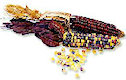 |
Indian corn; grown in agricultural communities in the Barrens. | |
| Malaybis | male derogatory, low one, weirdo | K |
| Malaybisti | male derogatory, the lowest of men, homosexual | K |
| Malcha | Boy | K |
| Male House Slave | A domestic male slave. | |
| mamba | large, predatory river tharlarion which inhabits the rivers of the rainforests inland of Schendi; they have long, log-like bodies, with short, powerful legs & a long snout & tail; similar to Earth crocodiles | |
| Mamba People / Tharlarion People | a cannibal tribe. Book 13: Explorers of Gor, page 393 | |
| Manacles | Heavy metal cuffs used on male slaves and captives. | |
| Man-at-Arms | A warrior; cavalryman. Often used to keep discipline during audiences with political figures. | |
| Manumission | The formal process of freeing a slave. | |
| Marble | Stone used in flooring, etc. | |
| March | Highly militaristic and organized, with divisors and multiples having to do with seemingly, a base-twelve mathematics, a March is a Kurii military unit consisting of twelve Bands and their officers (approximately 2100-2200 individuals). | |
| March of the First Five Born | A ritual of the Priest-Kings during the Gur ceremony in which the first five born of the Mother march forward, abreast to the Mother of the nest, to give her Gur, in reverse order of their status. | |
| Marchers | Army ants found in the rainforest of the Ushindi. | |
| Margin of Desolation | an area north of Ar that was made into a wilderness thousands of pasangs deep. Wells were poisoned, and fields burned and salted to prevent the approach of armies from the north. It was allowed to re-vegetate and re-populate. Some believe the reason is to bring more arable land under cultivation; others say that the eyes of Ar turned north toward the powerful Salerian Confederation. Book 1: Tarnsman of Gor, page 129 Book 7: Captive of Gor, page 255 Book 11: Slave Girl of Gor, page 145 | |
Marine Saurian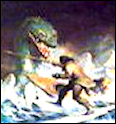 |
One of the many water lizards, of varying sizes and degrees of danger to man, that inhabit the Thassa. Most probably, the tharlarions of the water, from the tiny tharlarion to the gigantic sea-tharlarion. | |
| Mark of Black Dagger | The mark of the black dagger, a small, very fine image in black of a dagger, is used by a member of the Caste of Assassins to note visibly that he has been hired as a mercenary. After receiving his payment of gold, he affixes this mark to his forehead; such mark allows the Assassin unhindered access into all cities with a guarantee none will interfere in his work. | |
| Market of Semris | A city known for its commercial slave trade. | |
| marking stick | writing implement | |
| Marsh Barge | A high prowed barge used in navigating the reedy marshes of the Vosk delta, normally rowed by slaves. | |
| Marsh Gant | A long-legged marsh bird with a piping cry, similar to an Earth curlew (sandpiper). | |
| Marsh Girl | Daughter of a rence grower. | |
| Marsh Shark | One of the large carnivorous fish which inhabit the Vosk marshes. | |
| Marsh Spear | A weapon of the Rencers. | |
| Marsh Tharlarion | Large reptile found in the Vosk marshes. | |
| Marsh Turtle | Reptile found in the Vosk marshes. | |
| Marsh Vine | Vine found in the marshes along the Vosk. | |
| Marta | Cow | K |
| Martial Law | When Tarl Cabot stole the Home Stone of Ar, citizens rebelled and Ubar Marlenus fled, the Initiates seized control of the city. | |
| Mast Shield | a signal device that is raised and lowered on a serpents mast to signal approaching ships. A white shield indicates peace and a red war. Other colors mean other situations. | |
| Master Keeper / Slave Master | The one who, for example, in a Slaver's house, or on a ship, is responsible for the slaves' learning and discipline. | |
| Master of Revels | The Master of Entertainment of a city; this official is responsible for obtaining and issuing of licenses for the entertainment troupes; "gratuities" considered a perquisite of the office. | |
| Master-at-Arms | Officer charged with weapons training, maintenance of order, discipline and similar duties. Weapons trainer. John Norman changes the wording to Master of Arms in one of the passages. | |
| Master's Belt | a belt worn by the men of Torvaldsland from which hangs a knife in it's sheath, as well as a pouch and other accouterments. The axe is supported in it's own belt hung over the left shoulder, but it is also anchored by a ring in the master belt. Additionally, if the sword is not looped over the left shoulder, it will hung by its sheath and sheath straps from the master belt. Some say the name, 'master belt' derives from it's not infrequent use in the disciplining of bond-maids. Book 9: Marauders of Gor, page 50 | |
| Master's Couch | Often made of stone, covered in thick pelts and silk sheets for the comfort of the master. A slave ring is set in the bottom of the couch in order for the master to chain either his slave or his Free Companion. | |
| matok | a Priest-King term, it refers to an inhabitant of the Nest which is in the Nest but not of the Nest | |
| Mayam | Pleasure | K |
| maza | Kaiila or Dust Leg term meaning metal. Book 17: Savages of Gor, page 246 | |
| Mazahuhu | The term in the Dust-Leg dialect of the red savages meaning "bracelets." | |
| Mazahuhu Band /Napoktan | Literal, Bracelets Band. The Dust-Leg name for the Kaiila band known as the Napoktan. | |
| mazasa | copper Book 17: Savages of Gor, page 321 | |
| mazasapa | Kaiila or Dust Leg term meaning black metal; translated loosely into iron. Book 17: Savages of Gor, page 246 | |
| Mazj/Mazja | Corn | K |
| Me | Of | K |
| Meat Trap | A horrible, yet ingenious trap of the Innuit, in which a whale bone is sharpened at both ends, then folded in S-folds, tied with sinew and then hidden inside meat. These traps are often used against predators of the north, such as sleen. The death within an Ahn of an average sleen eating the meat, a painful, horrible death. | |
| meat-catch | a carnival-like game which involves slaves lined up on their knees, hands bound behind their backs who are tossed bits of meat to catch one at a time; the girls catching the meat, or recovering a missed bit by scrambling with the others for it, receive points for their Masters. Book 7: Captive of Gor, page 112 Book 25: Magicians of Gor, page 37 and 43 | |
| Medium Class | Denotes the size of a ship; most ram-ships are of medium or heavy class. | |
| Meh | Wish | K |
| Meh ne kar sheku, ja me'shan | Wishes for love everlasting My slave. | K |
| Meh ne kar sheku, Ja'hesa | Wishes for love everlasting my friend. | K |
| Meku | Bird | K |
| Melons | A gourd-fruit. | |
| Memory, The | although the Red Savages, described as ruthless and ferocious, seem to thrive on internecine warfare, there is one common tradition that will unite them over customary conflicts and rivalries. Their hatred of the white man, called simply, 'The Memory' always takes priority. Book 17: Savages of Gor, pages 35, 148 and 248 | |
| Men Below the Mountains | In reference to the humans that live on the planet of Gor, below the Sardar mountains. | |
| Men of Torvaldsland, creation of | according to Gorean legend, man was formed from the mud of the earth and the blood of tarns by the Priest-Kings. In Torvald legend, man was formed from the hoe, water, and salt by the Gods to serve as their slaves. Those of Torvaldsland share an addendum to this story. One of the gods, curious, careless, or, perhaps angry, threw his own axe to the ground and poured paga and his own blood upon it. The axe laughed, leapt up and fled so fast no Gods could catch him. He became the father of the men of Torvaldsland. Book 8: Hunters of Gor, pages 257-258 | |
| Merchant Foot/ Gorean Foot | The accurate wording of the unit of measure, which Tarl Cabot referred to as the "Gorean Foot." | |
| Merchant Fortresses | Forts erected by the merchants. Often, retinues of merchants caravans stop at these fortresses for rest, recoupment, purchasing and trading of goods, and such. Open to common merchants and slavers, as well as individual travelers. | |
| Merchant Keeps | Distinguished keeps that acknowledge them as owned by the merchant caste. These keeps sometimes are also banner keeps in which they fly the banner of the city under which the keep is established and administered. Free keeps which are owned by the merchant caste and rented out on a commercial basis. | |
| Merchant Law | A common body of law regulating weights, measurements, et al. Merchant Law is the only common body of law existing amongst the cities of Gor and standardization is kept current via the four annual fairs at the Sardar. | |
| Merchants, Caste of | One of the low castes, but a vital one. Caste of those who deal in merchandise and trading; their caste colors are white and gold | |
| Mesh Cage | Tiered, platformed cages that are found below decks on a slave cargo ship, made of a mesh to keep slave girls from being too muchly bitten by ship urts. | |
| Me'shan | Slave | K |
| Message Collar | A high, thick leather collar which is sewn around a person's neck. Sewn inside are messages. | |
| Message Drums | Drums beat in such a way to relay messages to others. In the Ushindi, the drum notes are similar to many of the dialects spoken, and therefore it is able to duplicate entire sentences on the drums. The great black Ubar, Bila Huruma, devised a spectacular drum stations which became superior to such devices as the smoke and beacon ciphers of the northern; second only to the advanced technology of the Priest-Kings and the Kurii. | |
| Message Flag | Flags used to communicate messages ship to ship. | |
| Message Rope | A message device used by the Priest-Kings made of a coil of cloth-like material. | |
| metaglana | a female who is no longer a virgin or 'glana' preceded by the state of 'profalarina' indicating a female who is about to be 'falarina' and before that by 'meta glana' one who looks forward to her deflowering. Book 17: Savages of Gor, page 203 Book 22: Dancer of Gor, page 128 | |
| Metal Workers, Caste of | One of the low castes of Gor. | |
| Mfalme | An inland word of the Ukungu dialect, which translates as a high chieftain. | |
| Miller, Caste of | One who mills grains. | |
| mindar | a short-winged, yellow & red bird of the rainforests inland of Schendi; with its sharp bill, it digs in the bark of flower trees for larvae & bugs | |
| Minor Blocks, The | In a slave auction house, the blocks upon which slaves are sold to the | |
| Mint | It is not mentioned which form of garden variety mint plant (spearmint or peppermint) is found on Gor. We do know that there has to be a mint plant as mint sticks were served as after dinner palate cleansers, as well as mint candies were often given to slave girls. | |
| mint stick | a confection served in a bowl on a tray set for black wine service, otherwise not described. Book 13: Explorers of Gor, page 10 | |
| Minus | A small village, owing tribute to Ar. | |
| mira | my | K |
| Misha | Captured | K |
| Mission of the First Capture | It is a young tarnsman first mission, to capture a slave for his personal quarters. It is rather a festive occasion for all, including the slave girl. | |
| Mistress Kiss | a Mistress bites her male slave diagonally across the mouth and lips. The teeth marks are evident for days with the bruising and swelling. This way other women see that the male slave has been used sexually by his Mistress. | |
| Mita | The term in the dialect of the Dust Legs and Kaiila tribes of the red savages meaning "my." | |
| Mitakoda | The term in the dialect of the Dust Legs tribe of the red savages meaning "my friend." | |
| Mitakola | The term in the dialect of the Kaiila tribe of the red savages meaning "my friend." | |
|
Modality of the She-Quadruped / She-Sleen
|
Possibly, this position for raping a slave girl was created by observers of the mating of sleens. Or perhaps the quote below is yet another reason for online Gor referring to the position as she-sleen: "You made me fetch a kaiila crop," she said, "on my hands and knees, and in my mouth, as though I might be a she-sleen." - Tribesmen of Gor, page 199. Also known as assuming the modality of the she-quadruped. She falls to her hands and knees, her head down on the floor, her hindquarters thrust high for viewing and/or her Master's pleasure. Serving in the modality of the she-quadruped is an instruction whereby the slave performs her regular duties upon hands and knees, without the benefit of the use of her hands. In this mode she may not rise to her feet and may use only her mouth and teeth to grasp and manipulate objects. | |
| Moon Seasons/ Red Savage Moons | the moons as they mark the seasons of Red Savage life. Among them are the winter moons of Waniyetuwi and Wanicokanwi, as well as the Istawicayanzanwi or Sore-Eye Moon. The moon of the Returning Gants or Magaksicaagliwi heralds early spring followed by Wozupiwi, the Planting Moon. Kantwasi is the moon when the plums are red. The moon in which the tabuk rut (Takiyuhawi) is also called the Canpasapawi, the moon when the chokecherries are ripe. The Canwapegiwiw is the moon when the leaves become brown followed by the Corn-Harvest Moon which is called either the Wayuksapiwi or Canwapekasnawi, the moon when the wind shakes off the leaves. The autumnal equinox occurs in Canwapegiwi. Book 17: Savages of Gor, pages 143-144, and 253 | |
Moons and Collar Brand |
Brand of slaves of the Priest-Kings. | |
moons, Gorean |
three moons shine on the planet, Gor, one large and two small ones, described as full, beautiful, and 'hurtling through' the clouds. They are said to have a biological effect on females, who are sometimes chained beneath them. It is suggested that the waxing and waning of the cycles of the moon correlate with the sexual cycles of the female. Book 1: Tarnsman of Gor, page 41 Book 2: Outlaw of Gor, page 34 Book 5: Assassin of Gor, page 170 Book 18: Blood Brothers of Gor, page 394 Book 25: Magicians of Gor, page 58 | |
Mortar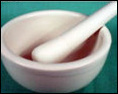 |
A bowl-shaped vessel in which grain is placed, grinding it into flour with the use of a pestle. | |
| Mortar Block | One of the stones used in an ancient grinding device called the quern. The mortar block, or the anvil block, is used principally in the same way as the more ancient method of the mortar and pestle. The mortar block serves as the base in which the grain rests. The pounding block descends into the mortar block continually through the use of a springy, bent pole. | |
| Mother, The | The highest authority in the Nest, though she was not considered a Priest-King. | |
| Mountebank | The mountebank hawks medicinal remedies, attracting customers with entertainment. | |
| Mounting Ladder | The ladder attached to a tarn saddle to enable the rider to mount the bird. | |
| Mu | Almost, About, Approximately | K |
| Mud Rafts | Small rafts made of log and liana vines which were used in the Ushindi by the rogue's chains. As they dug up mud to form a canal, the mud was then placed on these rafts for later disposal. | |
| mul | human slave to the Priest Kings | |
| mul fungus | A mushroom; bland whitish fibrous vegetable-like material which is the main food of muls. Book 3: Priest-Kings of Gor, page 109 Fed to the muls four ties per days | |
| Mul Translator Engineers | Muls that work for the Priest-Kings translating various languages; then coding such translations onto the Translator. | |
| Mul-Case | Transparent, plastic cubed chambers, which serve as living space for Muls. | |
| mul-pellets | surmised by Tarl Cabot to be a vitamin supplement for muls. Book 3: Priest-Kings of Gor, page 109 Made of fungus | |
| Mul-Torch | Torches specifically designed for working Muls to light the dark tunnels of the Nest; produce a vast amount of light, but produce little heat. | |
| Mushrooms | Tasty fungus, served stuffed, often with tarsk sausage. | |
| musicians | ...a group of nine musicians. They were not as yet playing, though one of them was absently tapping a rhythm on a small hand drum, the kaska; two others, with stringed instruments, were tuning them, putting their ears to the instruments. One of the instruments was an eight-stringed czehar, rather like a large flat oblong box; it is held across the lap when sitting cross-legged and is played with a horn pick; the other was the kalika, a six-stringed instrument; it, like the czehar, is flat-bridged and its strings are adjusted by means of small wooden cranks; on the other hand, it less resembles a low, flat box and suggests affinities to the banjo or guitar, though the sound box is hemispheric and the neck rather long; it, too, of course, like the czehar, is plucked; I have never seen a bowed instrument on Gor; also, I might mention, I have never on Gor seen any written music; I do not know if a notation exists; melodies are passed on from father to son, from master to apprentice. There was another kalika player, as well, but he was sitting there holding his instrument, watching the slave girls in the audience. The three flutists were polishing their instruments and talking together; it was shop talk I gathered, because one or the other would stop to illustrate some remark by a passage on his flute, and then one of the others would attempt to correct or improve on what he had done; occasionally their discussion grew heated. There was also a second drummer, also with a kaska, and another fellow, a younger one, who sat very seriously before what appeared to me to be a pile of objects; among them was a notched stick, played by sliding a polished tem-wood stick across its surface; cymbals of various sorts; which was obviously a tambourine; and several other instruments of a percussion variety, bits of metal on wires, gourds filled with pebbles, slave bells mounted on hand rings, and such. These various things, from time to time, would be used not only by himself but by others in the group, probably the second kaska player and the third flutist. Among Gorean musicians, incidentally, czehar players have the most prestige; there was only one in this group, I noted, and he was their leader; next follow the flutists and then the players of the kalika; the players of the drums come next; and the farthest fellow down the list is the man who keeps the bag of miscellaneous instruments, playing them and parceling them out to others as needed. Lastly, it might be mentioned, thinking it is of some interest, musicians on Gor are never enslaved; they may, of course, be exiled, tortured, slain and such; it is said, perhaps truly, that he who makes music must, like the tarn and the Vosk gull, be free. (Nomads of Gor, book iv, page 153-154) | |
| Musicians, Caste of | One of the low castes of Gor. | |
| Naartok | Masculine Innuit name which means "Fat Belly." | |
| Nadis | rope | K |
| Nadru | All | K |
nadu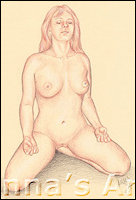 |
1. Nadu is the Gorean term that simply means "kneel." It is NOT the name of a position. Nadu is the Gorean word for the command which translates to "kneel". The command of Position is also utilized when commanding a slave to a specific position, which can include the position of the pleasure slave, and is used in lieu of the term nadu. 2. This is the most basic of all the positions. This is the position a slave is in most of the time. She kneels before her Master, her head held high, eyes downcast, knees spread wide open, shoulders back keeping her back straight (or arched slightly), breasts thrust outward. Her hands lie on her thighs, palms facing upward (or resting on her thighs). | |
| Napoktan | The term in the Kaiila dialect of the red savages meaning "bracelets." | |
| Napoktan Band | Literal, Sand Band. One of the five bands (subgroups) that make up the red savage Kaiila tribe; named for the copper bracelets worn on the left wrist. The smallest of the five bands, numbering only three- to four-hundred (300-400) members, claim the land east of the Snake River and north of the Northern Kaiila River and the Kaiila River proper. | |
| Narga'am | Camp, Place Of (Our) Fire | K |
| Nash | Day, Light | K |
| Neck Leash | Common leash in which two slave girls share the same leash attached to neck collars. | |
| needle fly / sting fly | these originate in the delta marshland and similar places. Its sting is extremely painful but it is usually not dangerous unless inflicted in great numbers. Book 24: Vagabonds of Gor, page 161 | |
| Needle tree / Evergreen Tree | a tree of the Thentis region, whose oil is used in perfumes and wood used for shipbuilding | |
| Neem, Neema | sexually warm, turned on, horny, aroused | K |
| Neim | Her | K |
| Nerak | Foolish, stupid | K |
| Neromiktok | Feminine Innuit name which means "Smooth-and-Soft-to-Touch." | |
| nesha | that | K |
| Neshuk | Please | K |
| Nest | the colony and home of the Priest-Kings in the Sardar; the ruler of the Nest is the Mother, from whose eggs the Priest-Kings are hatched | |
| Nest Feast Cycle | Celebratory feasts of the Priest-Kings. The Nest feast cycle involves three feasts: Tola (the nuptial), Tolam (the first egg laid), and Tolama (the first egg hatched). | |
| Nest Trust | the Priest-King equivalent of 'friendship' | |
| Nest War | A war amongst the Priest-Kings themselves; one faction led by Misk, another by Sarm. The Nest War nearly destroyed the Priest-Kings, as well as the entire planet of Gor, forever. | |
| nestle position | 'Nestle ' I told her. 'Yes Master ' she said. She nestled obediently in the crook of my left arm.' Book 13: Explorers of Gor, page 279 | |
| Netmen | Men who work the tarn races, that extract the tarns caught in the nets. | |
| Ngao | An inland (Schendi) word which means "Shield." | |
| Ni | Clan | K |
| Nichki | Bake | K |
| Nidan | Greets | K |
| Nidan Avan'she | Greetings Mistress | |
| nidan i'mota | greetings brother | |
| nidan jerag | greetings sister | |
| Nidan Vana'she | Greetings Master | |
| night gate | a gate or gates monitored to allow passage of bona fide citizens to and from the city after dark. Book 21: Mercenaries of Gor, page 102 | |
| Ninjin | Carrot | K |
| Nondominant, The | The "lesser male" of the Kur. | |
| Northern Brand | The brand common among the Torvaldslanders, though less uniform than its southern counterparts, is about one and one-half inches (1-1/2") wide and one and one-fourth inches (1-1/4") high, consisting of a half circle, which at its right tip and adjoining it, a steep, diagonal line; very symbolic as most brand representing the woman whose belly lies beneath the sword. | |
| Northern Kaiila River | The northern branch of the Kaiila River; its tributary is the Snake River. | |
Northern Lights of Gor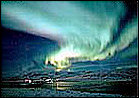 |
As on Earth, a dazzling spectacle of lights in the sky. However on Gor, the Kur take credit for its existence, being Kurii-made, rather than a natural phenomenon, used for signaling other Kur groups or human agents. | |
| Northern Shark | One of the several varieties of shark which inhabit Gor; most probably the White Shark. | |
| Northern Shield | round and wooden, variously painted, they are reinforced with iron bands, or leather, or small bronze plates. Hung, overlapping over the side of a ship, they are an indication of peaceful intent. Book 9: Marauders of Gor, page 32 | |
| nose ring | fine, gold ring fitted into a hole pierced into the septum of the nose. Among the Wagon Peoples, all females, slave and free wear such rings, as do their animals. Book 4: Nomads of Gor, page 27 Book 7: Captive of Gor, page 166 Book 17: Savages of Gor, page 11 | |
| Notched Beam Lock | A Gorean lock in which an extremely heavy sickle shaped key is inserted through a hole in the door, fitted into the noted, and then rotated, either to the left or the right, depending on whether the door is being locked or opened. The keys are so heavy, they can be used as a weapon. | |
| Notched Stick | A musical instrument. | |
| nu | a letter of the Gorean alphabet; corresponds to the Earth letter 'N' (?); apparently adapted from the Greek alphabet | |
| Nutmeg | Export from Bazi region; a spice. | |
| Nuts | There are no descriptions on what tree or other vegetation where they obtain these nondescript nuts; used in vulo stew, as well as in other dishes. | |
| nykus | victory; from the Greek nike | |
| Nyoka | 1. An inland (Schendi) word which means "Serpent." 2. River which is fed by Lake Ushindi and flows into the Schendi harbor before emptying into Thassa. | |
| Oar | Poles used to propels boats and ships. | |
| oar dance | a feat of agility performed by the rovers of Torvaldsland, that of leaping from moving oar to moving oar of the Serpent ships of the Torvald. Apparently a celebratory act. Book 9: Marauders of Gor, pages 82-83 | |
| Oar Shearing | Naval strategy commonly used; ships are equipped with shearing blades, which can devastate an enemy ship. | |
| Oar-Maker | Carpenter skilled at making oars. | |
| Oar-Master | One on a ship that watches oversees the galley slaves at the oars of the great ships; works in conjunction generally with the keleustes, however in the absence of such, must call time verbally to the oarsmen. | |
| Oasis, of Four Palms | a small oasis in the Tahari, that lies South of Red Rock Oasis, it is a Kavar outpost. | |
| Oasis, of Lame Kaiila | an out of the way tiny oasis in the Tahari. | |
| Oasis, of Red Rock | an out of the way oasis in the Tahari, ruled over by the Tashid tribe, a vassal tribe of the Aretai. Its kasbah has 4 towers and sits on the NE rim of the oasis. It has 5 date palm groves with a small pond that lies among them. On the east side of the oasis is a pomegranate orchard. Standing near the oasis is a large shelf of red sandstone, which lends its name to the oasis. | |
| Oasis, of Sand Sleen | an out of the way oasis in the Tahari, ruled over by the Kavar tribe. | |
| Oasis, of the Nine Wells | one of the larger oasis in the Tahari, ruled over by the Aretai tribe. It has a population of around 20 thousand, mostly farmers, craftsmen, and their families. There are two public bath houses at the oasis. | |
| Oasis, of Two Scimitars | an out of the way oasis in the Tahari, ruled over by the Bakahs tribe, a vassal tribe of the Kavars. | |
Obedience Position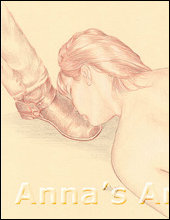 |
She goes to the floor, laying upon her stomach, face down before the Master. She turns her head and places her cheek against his feet, kissing them lightly in a gesture of love and submission. | |
| Obeisance | An action or movement which shows deference to another. | |
| Oblique Advance | Developed by Dietrich of Tarnburgh, this formation makes it possible for armies to choose to attack limited portions of the enemy, therefore engaging a much larger army and chipping away at it piece by piece. | |
| Observation Panel | Panel through which to view into another room, generally unseen. | |
| Octavii | ranked as first and second, these individuals are deputy commissioners in the records office of a city. Book 25: Magicians of Gor, pages 442 and 454 | |
| Odahla | feast, big meal | K |
| Odds Merchants / Track Merchants | The bookies of Gor | |
| Oijih | Little | K |
| Oil Clock | A clock which uses oil to tell time. | |
Oil Lamp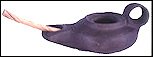 |
Lamps fueled by oil, usually of tharlarion oil; these lamps can be shallow bowls which rest atop shelves, or hanging lamps. | |
| Olakota | The term in the dialect of the Kaiila tribe of the red savages meaning "peace." | |
| Old Gorean | A language cultivated by the Initiates; not used by the common public. | |
| Olives | Tree which bears an edible fruit of the same name, used often as garnishes. | |
| Olni River | Major tributary of the Vosk. | |
| Omen Taking | A time of gathering of the Wagon Peoples, where the haruspexes read the omens. | |
| Omen Valley | The place where Omen-Taking is done. | |
| Omen Year | once every 10 years the 4 tribes of the wagon people gather together to meet and see if the omens are favorable to choose a Uber San, a leader that would rule over all 4 tribes of wagon people. | |
| omnion | a letter of the Gorean alphabet | |
| One Strap | One of the six (6) leather reins used in guiding a tarn. Tarl Cabot was able to teach his tarn to respond to verbal strap commands. | |
| One-Way Mirror | Developed by the Builders, on one side, a person can see through as if a window, on the other side, it appears only to be a mirror; commonly found in slave house. | |
| On-Guard Position | Fighting stance of the Warrior. | |
| Onion | Presumably the same as Earth onions. | |
opals, common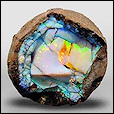 |
milky in color. Because they are much more rare on Gor they are of more value than those of Earth. Book 10: Tribesman of Gor, page 92 | |
opals, flame |
reddish and blue in color. Because they are much more rare on Gor they are of more value than those of Earth. Book 10: Tribesman of Gor, page 92 | |
| open-legged tie | right wrist is tied to right ankle, and left wrist to left ankle, with about six or seven inches of slack between wrist and ankle. It is not good for general security but is it a good and familiar slave tie. One advantage of this is that a girl may kneel comfortably for hours. Book 17: Savages of Gor, page 207 | |
| Or | a term to describe a military unit of the wagon people. Consisting of 10 able-bodied men. This unit is part of a larger unit called an Orlus. A commander of an Or is saluted with a lance striking the shield one time. Leader is called Commander of a Ten | |
| Oralu | a term to describe a military unit of the wagon people. Consisting of ten Orlu, a total of 1000 warriors. This is the largest manageable unit of the wagon people's warriors. A commander of an Oralu is saluted with a lance striking the shield three times. Leader is called Commander of a Thousand. | |
| Order of Enslavement | "Do you understand the Document?" he asked. "Yes," she said. "It is an order of enslavement." "You understand further, of course," he said, "that under Gorean Merchant law, which is the only law commonly acknowledged binding between cities, that you stand under separate permissions of enslavement. First, were you of Ar, it would be my right, could I be successful, to make of you a slave, for we share no Home Stone. Secondly, though you speak of yourself as the Lady Elicia of Ar, of Six Towers, you are, in actuality, Miss Elicia Nevins of the planet Earth. You are an Earth girl and thus stand within a general permission of enslavement, fair beauty quarry to any Gorean male whatsoever." Earth had no Home Stones. No legalities, thus, were contravened in capturing them and making of them abject slave girls. "The first to capture you, owns you," he said. "Prepare to be leashed as a slave." Slave Girl of Gor - Book 11 pg 394 |
|
| Orlu | Hundred. This term refers to the division of warriors of the Wagon Peoples made up of ten Tens. Similar to that of a unit in the U.S. Army. | |
| ost | tiny snake, about 12" long, bright orange in color; its venom causes extremely painful death within seconds; the ost of the rainforests inland of Schendi are red with black stripes | |
| Ostrakon (pl. Ostraka) | Tickets to events; sometimes used as betting markers. | |
| Others, The | The term that the Priest-Kings used in reference to the Kur. | |
| Outboard Oar | The outboard oar is generally the shortest oar. | |
| Outlaw | This refers to any man who refuse to practice his livelihood or attempt to alter his [Caste] status without consent of the Council of High Castes. | |
| Outrider | Scout of the Wagon Peoples. | |
| Owopte | The red savages term meaning the place from which a turnip is dug. There is no simple translation for this term. | |
| oysters | from the delta of the Vosk. Book 7: Captive of Gor, page 301 |