Gorean Glossary P-Q
Gor is a complex lifestyle based on a series of novels by John Norman featuring a strict caste system of highly trained Free and slaves. For more information, check out the Garden's section on Gor.
Note about this Glossary: items marked with a K are Kassar or Old Gorean, online-created languages used to augment Gorean. Kassar was not created or endorsed by John Norman and is not consistent within the Gorean language or universe. Kassar should be used cautiously and sparingly as many Goreans do not use or approve of the language.
| paga attendant | a male employee of a paga tavern, who supervises the serving of paga by slavegirls, and collects payment for the paga and the use of the slavegirls | |
| paga tavern | a business where paga, food, and other beverages are sold; a pub; the price of a serving girl is included with the drink. | |
| paga, drinking vessels | paga, the fermented drink made from Sa-Tarna grain seems to have no traditions surrounding it's service, as is demonstrated by the myriad variety of serving and drinking vessels deemed acceptable by the Gorean imbiber. The following annotations list these examples of drinking vessels: cups, brass cups, glasses, bowls, goblets, metal goblets, a silver goblet studded with rubies, a golden goblet, and a kantharos Book 5: Assassin of Gor, page 9 Book 6: Raiders of Gor, pages 102, 105, 111, 223 and 306 Book 9: Marauders of Gor, pages 22-23 Book 12: Beasts of Gor, page 371 Book 23: Renegades of Gor, page 71 and 77 | |
| paga; Pagar-Sa-Tarna | "pleasure of the life-daughter"; grain-based, distilled hard liquor akin to whiskey; sometimes served warm; A cup in a paga tavern would cost a tarsk bit. One of the large serving bottles may be purchased for a silver tarsk. Paga is served warmed to fiery hot. There seem to be no traditions surrounding it's service as demonstrated by the variety of vessels from which it is, stored, served and drunk. | |
| pagar | pleasure | |
| pagar kajira | pleasure slave | |
| Page Boy | Male slaves which serve as messengers of the Council of the Captains in Port Kar. | |
| Paki | (to) hate, dislike a lot | K |
| Pakisti | enemy | K |
| Palace Guard | Upon Marlenus' regaining the rule of Ar, he disbanded the Taurentians and created his own palace guard. | |
| Palace of the Tatrix | Regal residence of Lara, Tatrix of Tharna. | |
| Palestrae | A gymnasium. | |
| Palm Brand | One of the many varieties of slave brands. | |
| Palm Trees | More than 1500 varieties of palm trees exist on Gor; two examples are the Date Palm and the Fan Palm. | |
| palm wine | drink mentioned briefly; no description available. Book 13: Explorers of Gor, page 429 Drink of the Schendi region. | |
| Panga | A two-foot long, curve-bladed bush knife used in the Ushindi region for the cutting of vines and other jungle growth; a machete. | |
| Panther | Nocturnal feline of the forests and jungles. Also: "Forest Panther" and "Jungle Panther." | |
| Panther Girls / Forest Girls | Wild, free women of the forests generally coined panther girls. a free woman who lives as a hunter in small tribes of 15-100 members; they roam the northern forests of Gor; runaway women who live in the forest without free men, taking as slave most men who enters their domain and eventually selling him. Those of the northern forests dress in the teeth and skins of forest panthers which they slay with their spears and bows Book 7: Captive of Gor, page 82 and 118 | |
| paper | (rence): made from the fibers of the rence plant, a tall, long-stalked leafy plant which grows predominantly in the delta of the Vosk. (near Port Kar) (Nomads of Gor, book iv, page 49) (linen) Stout, glossy-surfaced linen paper, of the sort milled in Ar. (Nomads of Gor, book iv, page 49) (vellum and parchment): prepared in many cities and used commonly in scrolls, the process involved among other things the washing and liming of skins, their scraping and stretching, dusting them with sifted chalk, rubbing them down with pumice. (Nomads of Gor, book iv, page 49) |
|
| Parabu | Life | K |
| Parade of Slaves | a presentation of beauty and attractions in which the slaves present themselves one by one usually accompanied by music for the inspection of the guests. Commonly takes place in paga taverns and brothels but may take place elsewhere. Free women are usually not present. Book 24: Vagabonds of Gor, page 29 | |
Paravaci |
one of the 4 tribes of the Wagon Peoples; also called the Rich People; their standard is a boskhead-shaped banner made of jewels strung on gold wire | |
| Parchment | A fine paper used for scrolls. | |
| parfleche | kailiauk hide is prepared in sheets, cut almost as thin as paper, dried in the prairie sun and layered to form a flat, leather envelope which is sealed with a seam of hardened fat. Used to store food, such as kailiauk meat. Book 17: Savages of Gor, page 328 | |
| Parrot | Brightly colored bird of the Schendi. | |
| Parsit Current | The main ocean current above the polar basin; named for the migrating parsit that follow this current. | |
| parsit fish | a silvery fish having brown stripes | |
| Pas | health, vitality | K |
| pasang | A common unit of Gorean land measurement, is approximately seven-tenths of a mile. (Nomads of Gor, book iv, page 13) | |
| Pasang Stone | Gorean mile-markers; also set to be dually-used as sundials. | |
| Pasha | High ranking official amongst the desert nomadic tribes; the Pasha would be second to a Ubar. | |
| Pasheen | Best, Greatest | K |
| Pass Tile | Small, flat rectangle of made of clay, then glazed; used as an identifying means of entering specific rooms which are restricted. | |
| passage brand | a tiny brand in the form of spreading bosk horns found on the forearm of Goreans, it's presence guaranteeing their safe passage, at certain seasons, across the plains of the Wagon People. Book 4: Nomads of Gor, page 34. Also an Acceptance brand? | |
| Passage Hand | the 5-day period between Gorean months, which consist of 5 5- day weeks | |
| Passing of Turia | Migrational move of the Wagon Peoples as they head north for the winter months; the first of phases of the Omen Year. | |
| Passion Slave | a slave bred specifically for sex or a specific trait such as lip shape. Frequently also with a physical deformity such as a club foot. Male passion slaves are very rare. No Earth captive could ever be a passion slave. | |
| Pastures | In the Nest of the Priest-Kings, grown here are Sim plants, as well as the cattle of the Priest-Kings, an arthropod of unspecified type, tended by Muls. | |
| Pavi | (to) teach | K |
| Payn/Payna | Comb | K |
| Peach | No mention is made in the books as to the nature of the plant life which bears a yellow, fleshy fruit; most likely a tree. | |
| Pearls | Gemstone cultured from the Vosk sorp. | |
| Peas | Pod vegetable. | |
| Peasant Codes | Those codes of honor by which peasant communities live by. To dishonor those codes would result in expulsion from the community. | |
| Peasant Hoe | Implement slave girls of the peasant villages use to reap Suls. | |
| Peasant Staff | Heavy staff made of wood, used as a walking aid and as a weapon. | |
| Peasants, Caste of | the basic caste of Gor; they refer to themselves as the 'Ox on Which the Home Stone Rests' | |
| Peem | Cold | K |
| Pek | kiss | K |
| Pekchi | (to) foreswear, earnestly renounce | K |
| pemmican / Wakapapi | strips of dried kailiauk meat pounded into a powder and mixed with fruit, such as chokeberries, is fixed in kailiauk fat and shaped into round, flat cakes. Provides portable protein and energy source. Book 18: Blood Brothers of Gor, page 46 | |
| Penal Brothel | A prison; in such an institution, a free woman convicted of a crime may serve out her sentence while maintaining her status as a free person. | |
| Penalty Brands | Brands to mark a person as a thief, a liar, etc. | |
| Pentilicus Tallux | a renowned poet of the Ar of one hundred years ago, the Great Theater in Ar is named for him. It has a huge stage which can accommodate a thousand actors. Book 25: Magicians of Gor, page110 | |
| People, A | Highly militaristic and organized, with divisors and multiples having to do with seemingly, a base-twelve mathematics, a People is a Kurii military unit comprised of twelve Marches; their commander is also known as a Blood of the People. | |
| Peppers | Export from the Bazi region; a vegetable. | |
| Perdeechi | (to) degrade, lower, shame, deface | K |
| Perfect Bondage, The | The perfect union of a master and slave. | |
| Perfumed Rope | A paga tavern located in Ar. | |
| personal serving slave | a slave assigned or owned by the person she obeys. Her duties may include running errands, general cleaning, or caring for personal belongings. Book 25: Magicians of Gor, page 366 | |
Pestle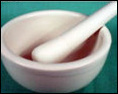 |
A utensil used for the pounding or grinding of grains in a mortar. See: "Mortar." | |
| Physician | A Kaissa piece. | |
| Physician's Gambit | A Kaissa move. | |
| Physicians, Caste of | One of the High Castes; the caste color is green. The building where I would wait on these days was the house of a physician. I was taken through a corridor to a special, rough room, where slaves were treated. There my camisk would be removed. On the first day the physician, a quiet man in the green garments of his caste, examined me, thoroughly. The instruments he used, the tests he performed, the samples he required were not unlike those of Earth. Of special interest to me was the fact that this room, primitive though it might be, was lit by what, in Gorean, is called an energy bulb, an invention of the Builders. I could see neither cords nor battery cases. Yet the room was filled with a soft, gentle, white light, which the physician could regulate by rotating the base of the bulb. Further, certain pieces of his instrumentation were clearly far from primitive. For example, there was a small machine with gauges and dials. In this he would place slides, containing drops of blood and urine, flecks of tissue, a strand of hair. With a stylus he would note readings on the machine, and, on the small screen at the top of the machine, I saw, vastly enlarged, what reminded me of an image witnessed under a microscope. (Captive of Gor, Book VII, Page 92) | |
| Pierced-Ear Girl | A slave girl with pierced ears, a symbol of the lowest slave. | |
| Pilgrimage to the Sardar | Every Gorean is required, at some point in his or her life, to make the journey to the Sardar, if only to simply the base of the mountains, to make pilgrimage. | |
| Pillar of Exchanges | about one hundred pasangs northwest of Tharna lonely white column of solid marble 400 feet in height and 100 feet in diameter. The solid pillar offers an almost ideal place for the exchange of prisoners. Book 2: Outlaw of Gor page, 141 | |
| Pin Hitch | One of the many simple, common Gorean knots. | |
| Pincer Blade | Nautical military tactic. | |
| Pin-Tumbler Lock | Most common of cylinder locks found on Gor. | |
| Pit Lock | Another form of a Gorean booby-trapped lock; when tampered with, a trap falls away, trapping the intruder in a pit below. | |
| placatory dance | dance intended to assuage the anger of a Master. It is usually free-form, depending on the situation. The 'Contrition Dance' of Turia is an example of a formal placatory dance. Book 22: Dancer of Gor, page 332 Book 25: Magicians of Gor, page 44 | |
| Places of Sanctuary | Specific locations in which Sanctuary is accorded in times of war. Not much is said about the Places as Sanctuary. In fact, the only mention is in Tarnsman of Gor, page 40. | |
| Plains of a Thousand Stakes | The playing field for the Love War games. | |
| Plains of Turia | southern prairies of Gor, described as a broad grassland, from the Thassa and the Ta-Thassa Mountains to the southern foothills of the Voltai Range. Called the Land of the Wagon Peoples, their holdings extend in the north to the Cartius River. Book 4: Nomads of Gor, pages 3 and 4 | |
| plank collar | a two-piece board hinged at one end and capable of being locked at the other, similar in operation to the stocks of 18th-century America and England; it has two or more semi-circular holes cut in each side so that it may fit around the necks of more than one slavegirl or captive free woman at one time | |
| Planting Feast of Sa-Tarna | An annual ceremony to ensure a good harvest. | |
| plate collar | collar made of flat metal, hammered around the slave, used for untrained slaves | |
| Platform of the Mother | Found in the Chamber of the Mother, where the Mother of the Priest-Kings lays. | |
| Platform Shoes | Shoes with thick heels to make the free woman appear taller than she truly is. | |
| Platforms | Large decks where slave girls are auctioned and sold | |
| Player | a member of a caste society who plays Kaissa professionally; their caste colors are red and yellow | |
| Player Kaissa | The codified version of Kaissa developed by the caste of Players. | |
| Players, Caste of | A professional Kaissa player. They are not a caste or clan in themselves, but rather men of various castes. | |
| Playj/Playja | Blanket | K |
| Pleasure Garden | place where men keep pagar kajirae, akin to a harem | |
| pleasure rack | a device, ranging in complexity from a grid of ropes in a wooden frame to a moveable, adjustable frame with chains, for the display and sexual use of slavegirls and captive free women | |
| pleasure silk | sheer, clingy form of silk worn only by slavegirls; wraps like a pareau, with a disrobing loop at the left shoulder | |
| Pleasure Silk, The | A paga tavern located in Ar. | |
| Pleasure Slave | 1. pagar kajira; a slave meant for sexual pleasure, usually kneels in the nadu position 2. Most common slave girl position of kneeling. | |
| Pleasures of the Golden Beetle | The Priest-Kings, attracted to the narcotic odor of the Golden Beetle, succumb to the insect, which in turns, kills the Priest-King. However, the narcotic produced by the Golden Beetle gives the Priest-King a sense of pleasures. | |
| Plenipotentiary | A diplomat. | |
| Poalu | Feminine Innuit name which means "Mitten." | |
| Pod Tree | Tree found in the Schendi region. | |
| Point Alfred | One of the Vosk River townships. | |
| poison | "I would not have thought Sauros of Tyros would have used poisoned steel," I said. Such a device, like the poisoned arrow, was not only against the codes of the warriors, but, generally, was regarded as unworthy of men. Poison was regarded as a woman's weapon." (pg. 18, Marauders of Gor) | |
| Poison Lock | Another booby-trapped Gorean lock, coated with the poisonous kanda. | |
| Pok/Poka | Bag, Sack | K |
| Polar North | referring to the area above the Hrimgar Mountains, home of the Red Hunters. Most of this land is tundra, a treeless plain covered with mosses, shrubs, and lichens during the summer. Some two hundred and forty different types of plants grow in the Gorean arctic within 500 pasangs of the pole. In the winter, early spring, and late fall, it is a desolate, bleak, frozen barren alien landscape. Book 12: Beasts of Gor, pages 195-196 | |
| Polemarkos | A military commander.. | |
| Pomegranate | Tree which produces hard shelled, red, fleshy, segmented fruits. The "hard larma"? | |
| Ponytail | On a slave girl, this sort of hairdo is known as the "Leash" or the "Hair Leash" and is often favored by masters because a girl may be seized and controlled by it. | |
| Pool of Ar's Glories | One of the pools of the Capacian Baths in Ar. | |
| Pool of Blue Flowers | One of the pools of the Capacian Baths in Ar. | |
| Pool of the Northern Forests | One of the pools of the Capacian Baths in Ar. | |
| Pool of the Splendor of the Hinrabians | One of the pools of the Capacian Baths in Ar. | |
| Pool of the Tropics | One of the pools of the Capacian Baths in Ar. | |
| Porcupine | This mammal lives is found in the rainforests of Gor. | |
| Port | The left side of a ship. However, though Tarl uses this term, it seems the expression "port" is not a part of the Gorean language, though there is an equivalent in Gorean, though he does not provide that information. | |
| Port Consortium | The regulating agency for merchant ships for port use in Port Kar. | |
| Port Cos | Small port city allied to Cos. | |
Port Kar |
Known for its caste of thieves and dancing girls, this city is located on the Thassa, protected by the Vosk marshes. City brand shown. | |
| Port Olni | A large port city on the Olni River. | |
| Position Chain | Chain, which is attached to both sides of the slave collar, is used by auctioneers on the slave block to hold a slave perfectly in position for exhibition. | |
| Posture | A command to a slave girl to stand a particular way. | |
| pot girl | a slavegirl whose main function is cooking and other menial tasks; used disparagingly | |
| Potato | A root vegetable. Did John Norman forget he created the Sul? | |
| Potters, Caste of | The makers of various types of pottery. | |
| Pounding Block | One of the stones used in an ancient grinding device called the quern. The pounding block is used principally in the same way as the more ancient method of the mortar and pestle. The pounding block descends into the mortar block continually through the use of a springy, bent pole | |
| Pouring Sling | A sling which cradles the very large bottles of such drinks as paga, making it easier to carry and pour these bottles. | |
| power of a slave | Yes, power. More than one Master, I suspect has been enslaved by the beauty who kneels before him. It is one of the excruciating delights of the Mastery to expose oneself fully to, and yet skirt the dangers of the girl's beauty, to keep oneself strong, to draw the absolute fullness of pleasure from her, and yet to resist her wiles, to get everything from her, and yet to keep her on her knees completely. Slave Girl of Gor, p.36 | |
| Praetor | Per John Norman's usage on Gor, a praetor is simply a police officer/judge of the docks. | |
| Prairie Grass | Grass commonly found on prairies and meadowlands. | |
| Prairie Urt | The small scavenger rodent of the plains. | |
| Praise Sheets | Hymnals to the Priest-Kings. | |
| Pral | male sex organ | K |
| Prayer Ring | ring with several tiny knobs on it has circular knob (like the golden circle at the termination of the Initiates staff notifies that one cycle of prayer has been completed. Book 25: Magicians of Gor, page 20 | |
| Prayer Strings | Probably much like rosary beads of Earth. | |
| Pride | A company of hunters; be it larl or Warrior. The following quote denotes "prides of a hundred warriors," however there is no indication anywhere else that this is a standard figure to denote a "Pride." | |
| pride veil | the third veil worn by free women; worn under the house veil and over the veil of the citizeness | |
Priest Kings; Sardar |
My father then explained to me something of the legends of the Priest-Kings, and I gathered that they seemed to be true to this degree at least--that the Priest-Kings could destroy or control whatever they wished, that they were, in effect, the divinities of this world. It was supposed that they were aware of all that transpired on their planet, but, if so, I was informed that they seemed, on the whole, to take little note of it. It was rumored, according to my father, that they cultivated holiness in their mountains, and in their contemplation could not be concerned with the realities and evils of the outside and unimportant world. They were, so to speak, absentee divinities, existent but remote, not to be bothered with the fears and turmoil of the mortals beyond their mountains. This conjecture, the seeking of holiness, however, seemed to me to fit not well with the sickening fate apparently awaiting those who attempted the mountains. I found it difficult to conceive of one of those theoretical saints rousing himself from contemplation to hurl the scraps of interlopers to the plains below. "There is at least one area, however," said my father, "in which the Priest-Kings do take a most active interest in this world, and that is the area of technology. They limit, selectively, the technology available to us, the Men Below the Mountains. For example, incredible enough, weapon technology is controlled to the point where the most powerful devices of war are the crossbow and lance. Further, there is no mechanized transportation or communication equipment or detection devices such as the radar and sonar equipment so much in evidence in the military establishments of your world. "On the other hand," he said, "you will learn that in lighting, shelter, agricultural techniques, and medicine, for example, the Mortals, or the Men Below the Mountains, are relatively advanced." He looked at me--amused, I think. "You wonder," he said, "why the numerous, rather obvious deficits in our technology have not been repaired--in spite of the Priest-Kings. It crosses your mind that there must exist minds on this world capable of designing such things as, say, rifles and armored vehicles." "Surely these things must be produced," I urged. "And you are right," he said grimly, "From time to time they are, but their owners are then destroyed, bursting into flame." "Like the envelope of blue metal?" "Yes," he said. "It is Flame Death merely to possess a weapon of the interdicted sort. Sometimes bold individuals create or acquire such war materials and sometimes for as long as a year escape the Flame Death, but sooner or later they are struck down." His eye were hard. "I once saw it happen," he said. (conversation between Tarl Cabot and Michael Cabot, Tarnsman of Gor, book I, page 31-32) Brand shown. |
|
| Prison Moon | of the three moons orbiting Gor, the name given to one of the two smaller ones. Book 5: Assassins of Gor, page 170 | |
| Prition | title of a treatise on bondage written by Clearchus of Cos | |
| private master | an individual free man who owns slaves chosen for the pleasure he will personally receive from owning them and being in their company. Book 25: Magicians of Gor, pages 112-113 | |
| Private Slave Pens | Boarding kennels for slaves, often such is utilized by an individual master as the quality is superior to that of the public slave pens. Training is also provided in the private slave pens. | |
| Probe Ships | Stealth air ships of the Kur. | |
| Procession To The Sea | A yearly procession at sea. | |
| profalarina | a female who is no longer a virgin or 'glana' preceded by the state of 'profalarina' indicating a female who is about to be 'falarina' and before that by 'meta glana' one who looks forward to her deflowering. Book 17: Savages of Gor, page 203 Book 22: Dancer of Gor, page 128 | |
| prostrate |
the slave kneels, bows her head, leans forward and touches her forehead to the floor, stretches her arms out before her with palms face down and fingers spread. Book 19: Kajira of Gor, page 305 | |
| Protection Tax | a tax levied on merchants in the Tahari by the keepers of the oases. If the caravan is of a certain length, normally of more than 50 Kaiila, the tax is payed to defray the cost of maintaining soldiers, who, nominally, police the desert around the oasis. | |
Prow Girl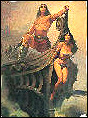 |
On Merchant ships, and even on warships, if luck has it that one of the spoils is a beautiful girl, this girl is chained to the prow (front) of the ship, so that as the ship returns home, the captain's wealth is displayed. | |
| Pte | The expression 'Kailiauk' is used by most of the tribes for the kailiauk, which is not an animal native to Earth. The expression 'Pte' designates the kailiauk female, or kailiauk cow. It is also used, colloquially, interestingly, for the kailiauk in general. This is perhaps because the 'Pte' is regarded, in a sense, as the mother of the tribes. It is she, in the final analysis, which makes possible their hunting, nomadic life. Like any similar peoples, the red savages have generally a great reverence and affection for the animals in their environment. This is particularly true of the animals on which they depend for their food. The useless or meaningless slaughter of such would be unthinkable. - Savages of Gor, page 326. | |
| Public Kitchens and Tables | Gorean restaurants. These large tents are set up at the Sardar Fairs and provide meals, and a girl as well, if desired. | |
| public master | an individual free man or institution owning multiple slaves who are chosen for pleasing others, bringing indirect pleasure to their owner. Examples are feast slaves, flute girls, or state slaves. Book 25: Magicians of Gor, pages 112-113 | |
| Public Slave / State Slave | A state slave. | |
| Public Slave Pens | Slave compounds which rent space to passing slavers or individuals, as well as provide house for the state slaves of a city. | |
| Public Slave Wagon | A kind of combination of Paga tavern and slave market. | |
| Public Tents | Much like a Paga Tavern, these large tents are set up at the Sardar Fairs, providing paga and wines, but also lodging and a girl, if desired. Meals are not provided, however. | |
| Pudjortok | Feminine Innuit name which means "Thimble." | |
| Pulley-Makers | The makers of pulleys for raising and lowering sails. | |
| Pumice | Lava stones full of holes that are great for smoothing and polishing. | |
| Pumpkin | Vegetable grown in agricultural communities in the Barrens. | |
| Punt | A pontoon; a small boat, flat-bottomed and square-ended, which is move ahead of the marsh barges, the slaves cutting down rushes to clear the path. | |
| Purple Booth, The | A practice amongst slavers when selling to important and rich customers, is to afford the prospective buyer a chance to test the intimate qualities of a red-silk slave girl before purchasing. Such allowances are set up in purple booths. | |
| Qa / Ne | for | K |
| Qal | Clean | K |
| Qaleengu | Admiration, Shared Experience | K |
| Qaleeni | Boil | K |
| Qaleenichi | Alcohol | K |
| Qalma | Dove | K |
| Qam | Daughter | K |
| Qath/ Qatha/ Qathi | Battle | K |
| Qlad/Qlada | Bank, Shore, Edge | K |
| Qolti | Check, Inspect, Test, Investigate | K |
| quala | small, dun-colored, 3-toed mammal with a stiff, brushy mane of black hair; pl. qualae | |
| quarrel | small arrow of the crossbow. It's initial velocity is the better part of a pasang per second. The crossbow is the preferred weapon of the assassin. Book 1: Tarnsman of Gor, page 100 Book 6: Raiders of Gor, page 2 | |
quern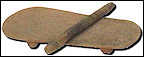 |
An ancient device for the grinding of grain into flour. Most Sa-Tarna grain is commercially ground into flour at large mills using large querns, made of large stones, turned generally by water power, but also, at times, by male slaves, or tharlarion. Females cannot turn these large querns. In the smaller villages, a smaller version of the quern, somewhat akin to the mortar and pestle, is used, however, this type of quern is operated by men or boys, depending on the size of the quern. A smaller, hand-held quern in which a female can operate, uses a similar principal, but turned with a wooden handle. A grinding implement which consists primarily of a mount, two stones, an overhead beam and a pole. The two stones are circular grinding stones. The bottom stone has a small hub on its upper surface which fits into an inverted concave depression in the upper stone. This helps to keep the stones together. It also has shallow, radiating surface grooves through which the grindings may escape between the stones. Book 23: Renegades of Gor, page 18 | |
| Quicksand | The same sticky stuff as is on Earth. | |
Quirt |
A small leather riding whip favored amongst the free women, as it is light and easy for them to wield, yet it delivers a vicious bite. | |
| Quiva / Saddle Knife | a weapon of the wagon people. A balanced throwing knife about a foot in length, doubled edged and tapered to a point like a dagger. They are commonly carried on the saddles of the warriors of the wagon people. | |
| Quiver | The leather case in which arrows and quarrels are carried; can also refer to the arrows inside a quiver. | |
| Qwastiki | even so-why? (I question... or I wonder...) | K |