Gorean Glossary W-Z
Gor is a complex lifestyle based on a series of novels by John Norman featuring a strict caste system of highly trained Free and slaves. For more information, check out the Garden's section on Gor.
Note about this Glossary: items marked with a K are Kassar or Old Gorean, online-created languages used to augment Gorean. Kassar was not created or endorsed by John Norman and is not consistent within the Gorean language or universe. Kassar should be used cautiously and sparingly as many Goreans do not use or approve of the language.
| Wa'ali | Bring Me (As A Slave Command) | K |
| wader, ring-necked | a variety of water bird which inhabits the rivers of the rainforests inland of Schendi | |
| wader, yellow-legged | a variety of waterbird which inhabits the rivers of the rainforests inland of Schendi | |
| wagon | The wagons of the Wagon Peoples are, in their hundreds and thousands, in their brilliant, variegated colors, a glorious sight. Surprisingly the wagons are almost square, each the size of a large room. Each is drawn by a double team of bosk, four in a team, with each team linked to its wagon tongue, the tongues being joined by tem-wood crossbars. The two axles of the wagon are also of tem-wood, which perhaps, because of its flexibility, joined with the general flatness of the southern Gorean plains, permits the width of the wagons. The wagon box, which stands almost six feet from the ground, is formed of black, lacquered planks of tem-wood. Inside the wagon box, which is square, there is fixed a rounded, tentlike frame, covered with the taut, painted, varnished hides of bosks. These hides are richly colored, and often worked with fantastic designs, each wagon competing with its neighbor to be the boldest and most exciting. The rounded frame is fixed somewhat within the square of the wagon box, so that a walkway, almost like a ship's bridge, surrounds the frame. The sides of the wagon box, incidentally, are, here and there, perforated with arrow ports, for the small horn bow of the Wagon Peoples can be used to advantage not only from the back of a kaiila but, like the crossbow, from such cramped quarters. One of the most striking features of these wagons is the wheels, which are huge, the back wheels having a diameter of about ten feet; the front wheels are, like those of the Conestoga wagon, slightly smaller, in this case, about eight feet in diameter; the larger rear wheels are more difficult to mire; the smaller front wheels, nearer the pulling power of the bosk, permit a somewhat easier turning of the wagon. The wheels are carved wood and, like the wagon hides, are richly painted. Thick strips of boskhide form the wheel rims, which are replaced three to four times a year. The wagon is guided by a series of eight straps, two each for the four lead animals. Normally, however, the wagons are tied in tandem fashion, in numerous long columns, and only the lead wagons are guided, the others simply following, thongs running from the rear of one wagon to the nose rings of the bosk following, sometimes as much as thirty yards behind, with the next wagon; also, too, a wagon is often guided by a woman or boy who walks beside the lead animals with a short stick. The interior of the wagons, lashed shut, protected from the dust of the march, are often rich, marvelously carpeted and hung, filled with chests and silks, and booty from looted caravans, lit by hanging tharlarion oil lamps, the golden light of which falls on the silken cushions, the ankle-deep, intricately wrought carpets. In the center of the wagon there is a small, shallow fire bowl, formed of copper, with a raised brass grating. Some cooking is done here, though the bowl is largely to furnish heat. The smoke escapes by a smoke hole at the dome of the tentlike frame, a hole which is shut when the wagons move. (Nomads of Gor, book iv, page 30) |
|
| Wagon Box | The main body of the wagon. "The wagon box, which stands almost six feet from the ground, is formed of black, lacquered planks of tem-wood. Inside the wagon box, which is square, there is fixed a rounded, tentlike frame, covered with the taut, painted, varnished hides of bosks." - Nomads of Gor, pages 30-31. | |
| Wagon Justice | A means of punishment for criminals amongst those of the wagons. | |
| Wagon People | Some tribes: Kassars, Kataii, Paravaci, Tuchuk; four nomadic tribes that wander the Plains of Turia with their immense herds of bosk | |
| Wagon Tongue | Device which links the wagon to the harnessed bosk. | |
| Waiting Cells | Holding cells where slaves are kept while waiting to be taken to the market to be sold. | |
| Waiting Hand | the 5-day period between the 12th Passage Hand and the beginning of the New Year, which begins on the Vernal Equinox | |
| waking chain | adjustable chains fastened on the ankles of a slavegirl to train her to walk with the length of stride preferred by her Master Book 10: Tribesmen of Gor, page 48; may also be used by Free Women to measure her gait. Sometimes a FW uses a chain, other times, a length of silk. | |
| Wales | The bands of planking on a ship's hull. | |
| Wali | Carry, Support | K |
Walk |
When this command is given, she turns in a graceful pirouette, her hair swinging. She then walks, gliding across the room, her feet hardly seeming to leave the floor, her hips swaying sensually, her body erect and proud. When she reaches her objective she halts and stands, her body erect, her shoulders back, her chest thrust forward, her belly in. She turns her hip out a bit, her hands at her sides, and points one foot. Her head is up and her eyes are lowered. | |
| walking chains | walking chains (noun): adjustable chains fastened on the ankles of a slavegirl to train her to walk with the length of stride preferred by her master | |
| Wall Nets | Very large nets which used to block escape paths; often the employ of slaves to hold these nets is utilized, so that the warriors can then attack. | |
| Wall, The | A military defensive tactic in which massed infantry remains stationary, bracing themselves for the charge of tharlarion. | |
| walled garden | a place where free women are raised until marriage | |
| Wallet | Generally made of leather, a pouch worn around a person's waist to carry such things as money or food. | |
| Waniyanpi | "tame cattle" also known as 'The Sames', a community of slaves who exist in the domains of the Kaiila Tribes. They are owned collectively by the tribes within the lands they inhabit. They grow produce and furnish labor when required. They subscribe to a unisex ethos, bound by 'The Teaching' a cult-like dogma of 'sameness' which says that males, females, animals, vegetables, minerals and abstract concepts are all equal to one. Among the many oddities is their aversion to heterosexual sex. They breed publicaly, though anonymously, monitored by their owners at specified times. Homosexuality is tolerated. Book 17: Savages of Gor, page 272 and page 291 Book 18: Blood Brothers of Gor, pages 131, 152, 156-157 | |
| Wapike | In the Kaiila dialect of the red savages, the term translates to "one who is fortunate." | |
| War Arrow | Type of arrowhead designed for battle, using both flight and sheath type arrow shafts. The war arrow is also called a broad-headed arrow or barbed arrow which carries barbs or is cut straight across at the base, preventing it from being easily withdrawn from a wound. The head of the war arrow is less securely fastened to the shaft than the hunting arrow, which causes to leave it behind if the arrow is withdrawn. | |
| War Galley | Any one of the different long ships, or ram-ships, used exclusively for fighting in the sea. | |
| War Lanterns | Brightly colored lanterns used for signaling a rallying of warriors, as well as for maneuvering military units. Specific positioning of these lanterns informs the warriors of the situation at hand. | |
| War Trumpet | Instrument utilized to make war signals. | |
| Warbler | Variety of bird commonly found in the rainforests. | |
| Warning Marks | Bits of colored rep-cloth tied in the Vosk delta as a means to warn strangers of danger; used by the rence growers. | |
| Warrior Salute | The common exchange of warriors, acknowledging each other, performed by lifting their blade to the other. | |
| Warrior's Dance | Warriors in swordplay. | |
| Warrior's Pace | a slow jog that can be maintained for hours | |
| Warrior's Society | societies within the tribes of the Red Savages that have many functions. They keep order in the camps and on treks, function as guards and police, keep the tribes apprised as to the movements of the kailiauk, and help to organize and police tribal hunts. They provide institutions through which merit can be recognized and rewarded, traditions can be maintained and renewed. Their rivalries provide an outlet for inter-tribal aggressions. Within the society itself, the members profit from the values of alliance, camaraderie, and friendship. Each society has its own medicines and histories. Book 17: Savages of Gor, page 260 | |
| Warriors, Caste of | the caste which includes infantry, tharlarion cavalry, and tarnsmen; one of the five High Castes which make up Gorean government, and as such the military branch of the government; their caste color is red "`You have drawn a weapon against me,' I said. `You are of the warriors?' said the fellow. He wavered. He, too, knew the codes. `Yes,' I said. `And he?' asked the fellow. `He, too,' I said. `You are not in the scarlet,' he said. `True,' I said. Did he think that the color of a fellow's garments was what made him a warrior? Surely he must realize that one not of the warriors might affect the scarlet, and that one who wore the grimed gray of a peasant, one barefoot, and armed only with the great staff, might be of the scarlet caste. It is not the uniform which makes the warrior, the soldier." (pg.129, Magicians of Gor) "You are here," he said, " because you are of the Warriors." "I am not of the Warriors," I said. "Not everyone who is of the Warriors knows that he is of the Warriors," said Callimachus. "I do not understand," I said. "I have seen it," he said, " in your eyes, that you are of the Warriors." "You are mad," I said. "Ten thousand years ago," he said, " in the mixings of bloods, and in the rapings of conquered maids, the caste has chosen you." (pg. 317, Rogue of Gor) "Once Bila Huruma lifted his hand and said, "good." the soldier then commended would then, I think, rather have dies then betray Bila Huruma. Such small things, I think, may be scorned by those who do not understand the nature of war or men, and be seen as manipulative and laughable, and yet such a small commendation, when warranted and sincere, is worth more to some men then the material treasures that might move those who hold themselves their superiors. Let each man choose his treasures. the cynical, mercantile mind will never understand the mind of the soldier. the soldier has stood with comrades in arms, and held. I do not think he would exchange that for the contemptuous pretense to wisdom of those whom he protects, who would scorn him. He has maintained his post. But perhaps some, even those who have never marched in the mud, with comrades, singing, on a clear and windy morning, a spear upon their shoulder, can understand this. Why does the nibbling urt chatter and laugh at the larl? Is it because he himself is not a larl, or is it because he fears its paw?" (pg. 229, Explorers of Gor) "`You are of the Warriors,' said he... `You have their stupidity, their grit, their courage.' (pg.227, Tribesmen of Gor) `You are a monster, Captain,' he laughed. `I am of the warriors,' I said. `I know your sort,' he said. `It is the fight you relish. What a wicked sort you are, and yet how useful!' I shrugged. `You see a fight you want, you take it,' he said, `You see a woman you like, you take her.' `Perhaps if she pleased me,' I said. `You would do as you wished,' he said. `Of course,' I said. `Warrior!' said he. `Yes, Warrior,' I said." (pg.33, Beasts of Gor) "Gold had been nothing to Rim. I suspected, then, he might once have been of the warriors." (pg.17, Hunters of Gor) "`No,' he said. `I do not keep you because of the gold. I am of the scarlet caste. I am of the warriors. I could cast the gold away, as a gesture.'" (pg.490, Vagabonds of Gor) "I am of the Warriors. I will take by the sword what women please me." (pg. 348, Beasts of Gor) "You may think that to be a warrior is to be large, or strong, and to be skilled with weapons, to have a blade at your hip, to know the grasp of the spear, to wear the scarlet, to know the fitting of the iron helm upon one's countenance, but these are things are not truly needful; they are not, truly what makes one man a warrior and another not. Many men are strong, and large, and skilled with weapons. Any man might, if he dared, don the scarlet and gird himself with weapons. Any man might place upon his brow the helm of iron. But it is not the scarlet, not the steel, not the helm which makes a warrior. It is the codes." ( pg. 340, Beasts of Gor) |
|
| washing booth | similar to showers, these use chemicals to cleanse muls in the Nest of the Priest Kings; they are placed within apartments and about the Nest. Book 3: Priest-Kings of Gor, page 111 | |
| wasnaphodi | Kailla or Dust Leg term meaning pimples. Book 17: Savages of Gor, page 238 and 262 | |
| Wastes, The | The vast area of the Tahari that lies east of Tor, hundreds of pasangs deep, thousands of pasangs long; rarely traveled. | |
| Water Arrow | Markers utilized in the Tahari to indicate water holes or underground cisterns. | |
| Water Lizards | Marine saurians found in various fresh waters of Gor. | |
| Water Tharlarion | Marine saurians found in various fresh waters of Gor. | |
| Watonka | In the language of the Kaiila tribe of the Barrens, this word translates to "One-Who-ls-Rich." | |
| Wayuhahaka | In the language of the red savages, the term meaning "one who possesses much." | |
| Wazir | Inland (Schendi) word for an ambassador or cabinet member to the Ubar. | |
| Weavers | Not much is said about this caste, or its trade. | |
| Weight | a unit of measurement equal to 10 Stone, or 40 Earth pounds, equal 1 Weight | |
| Wench Sport | Gorean reference to the gang rape of a slave girl. | |
| wergild | a ransom or bribe. A man who is an outlaw can redeem himself by paying a wergild to the official who sets it. Once paid he is 'pardoned' no longer an outlaw. Book 9: Marauders of Gor, page 94 | |
| Western Platforms | At the fairs of the Sardar, these are the platforms reserved for processing and organization of the girls to be sold. | |
| whales | baleen, Hunjer, Karl, hunted by Red Hunters, Beasts of Gor, page 36 | |
| Wharfage | The charge imposed for the handling of goods and the use of the dock by ships. | |
| Wheel, The | In the Tahari, the "Wheel" is a pattern for searching people lost in the desert. | |
| whip dance | a girl dances on the sand under the whips of Masters. Book 6: Raiders of Gor, page 100 | |
| Whip Knife | a whip with razors embedded in the tip, found only in Port Kar | |
| Whip of the Furs | a method of disciplining slavegirls by rape rather than by flogging; esp. popular in Torvaldsland | |
| Whip Slave | A slave who holds whip rights over the other slaves. | |
| Whipping Frame | A heavy wooden frame on which a slave is bound for beating. | |
| Whipping Pole | Tall, thick, heavy pole which slaves are bound to and whipped. | |
Whipping Position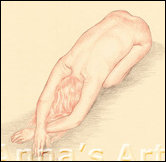 |
She first assumes the Nadu position, though with her arms crossed in front of her. She then leans forward and places her head to the floor, first sweeping her hair forward over her shoulders in order that her back might be utterly exposed to the whip. | |
| Whipping Stick | Used for controlling the draft river tharlarions by bargemen. | |
| Whipping Strap | Another term to describe a whip used in the discipline of a slave; the strap can be of leather or rope. | |
| White | A color that most Goreans associate with impartiality. Also, the caste color of the Initiates. | |
| White Shark | One of the several varieties of shark which inhabit Gor. | |
| white silk girl | a virgin or as is said on Gor, a slave who has not been 'opened by men'. Book 17: Savages of Gor, page 205 Book 18: Blood Brothers of Gor, page 472 Book 22: Dancer of Gor, page 128 A virgin slave. Often, one will find on VT Gor, the refer to a white silk girl as a restricted slave, which is not exactly correct. Often times a white silk girl is merely raped to make her a red silk girl, thus making her ready for auction. Other times, however, when a particular white silk girl is intended for purchase by a specific customer of high importance, keeping her safely a virgin is tantamount. Although she may be kept naked, she would be kept in a chastity belt. A white silk girl does not necessarily wear white-colored silks. | |
| White Water | One of many of the Vosk River townships. | |
| Wicincala | Kaiila or Dust Leg word meaning girl. Book 17: Savages of Gor, page 230 | |
| wine master presentation | in which the slave offers not only wine to the master, but herself and her beauty for his consideration. Book 24: Vagabonds of Gor, page 352 | |
| wingfish | tiny blue salt-water fish with 4 poisonous spines on its dorsal fin; found in the waters off Port Kar; its liver is considered a delicacy in Turia | |
| Wintering, The | Migrational move of the Wagon Peoples as they move to warmer ground for the winter months; the second of phases of the Omen Year. | |
| Wismahi | The term in the Kaiila dialect of the red savages meaning "arrowhead." | |
| Wismahi Band | Literal, Sand Band. One of the five bands (subgroups) that make up the red savage Kaiila tribe. There are various speculations on the origin of the name. One story is based on an encampment of this band one winter, where two rivers joined, forming an arrowhead pattern. Another claims that the band lived once in a flint-rich area, and thrived on extensive trade with neighboring tribes prior to the availability of trading zones. One of the smaller bands, numbering approximately five- to six-hundred members, claim the more northern lands in and below to a small extent of the fork of the Kaiila River. | |
| Witankanka | In the Kaiila dialect of the red savages, the term translates to "one who is proud." | |
| Wochak, Wochaka | Bed | K |
| Wochaki | (to) fuck, actual meaning (to) sleep, Let's fuck;' sleeping familiarly' | K |
| Wochi | (to) lay or lie | K |
| Wochi Feq! | Lie flat! | K |
| Wolakota | The term in the dialect of the Kaiila tribe of the red savages meaning "friendship." | |
| Womnaka | A word of the Dust Leg and Kaiila tribes which literally means "something which exudes much odor;" most likely the word is in reference to dung. | |
| Woo | Above, Up, On, Upon | K |
| Wooden Locks | Locks made of wood; not often used as they are not very secure. | |
| Wooden Pegs | Pegs, or nails, made of wood, used in the building of ships. | |
| Woodpecker | Variety of bird commonly found in the rainforests. | |
| Wook/ Wooka/Wooki | Bridge | K |
| Woon, Woona | Ceiling | K |
| Wopeton | Word in the dialect of the Dust Leg and Kaiila tribes of the red savages for "Merchant" or "Trader." | |
| work chain | work gangs ostensibly free but often 'conscripted' or 'drafted'. They are free labor but not slave. The chains are identified by color as depending on their purpose, such as 'black', 'red', or 'yellow'. Book 22: Dancer of Gor, page 301 and 320-322 | |
| Work Collars | Made of steel and worn over their regular collars, collars which most probably reflect that the girl is currently at task, and as protection of their regular collars. | |
| work slave | a category of slaves consisting of field slaves, stable slaves, etc. These females are considered, like kettle and mat girls, to be low slaves. Book 25: Magicians of Gor, page 305 | |
| World's End | That part of Gor of which, in myth, is described as the limits of a flat planet, a place where men may attempt to go, and never return, guarded by monsters and other cruelties of nature. This is the belief of those in the lower castes who are only taught the First Knowledge, not knowing that the planet is round and not flat. | |
| Wozupiwi | In the language of the red savages, term meaning the Planting Moon; one of the spring moons. | |
| Wristlet | Not much is described of the wristlets worn by men. Wristlets generally are a band of leather which encircles the wrists; protects the wrist. | |
| Yaduk | jealous | K |
| yas, yasa | bone | K |
| Year Keepers | That clan of the Wagon People, whose role is to keep track of the years; the historians. | |
| Yeli | (to) move about, walk | K |
| Yelita | come here, (I am) coming | K |
| Yellow Gim | A variety of bird found in the Ushindi. | |
| Yellow Knives | One of the "wild" tribes of the Barrens interior. A warrior society of this tribe is known as the Urt Soldiers. | |
| Yellow Pleasure Silk (Slave) | A slave garment. Yellow silks are worn by paga slaves. | |
| Yellow Pool of Turia | housed in a magnificent chamber in the House of Saphrar is a marble basin filled with a brilliant, yellow fluid. Beneath it's oddly shifting surface is a collection of threads and granules in a transparent bag of intertwined, writhing filaments and spheres, imbedded in a darkish, yellow jelly and walled in by a translucent membrane. The pool is a living, breathing monster that slowly digests it's victims. The Yellow Pool was destroyed by Kamchak after he conquered Turia Book 4: Nomads of Gor, pages 202-213 and 322-323 | |
| Yellow Salt | Most of the salt used on Gor is from the mines of Klima, located in the Tahari desert. There is mention of a yellow colored salt, but no indication of where this salt is mined or found, except that it is "from the south." | |
| Yellow-Kaiila Riders | A warrior society of the Kaiila; painted on the flanks of their kaiila a depiction of the kaiila in yellow print over red horizontal bars. Not to be confused with the Yellow Knives. | |
| Yoke | This device can be made of either wood or bone (generally wood), with holes drilled in the middle and at each end. | |
| zad | a large, broad-winged, black-&- white bird with a long, narrow, yellowish, hooked beak, found in the Tahari; they scavenge on carrion; similar to the Earth vulture | |
| zad, jungle | bird; a cousin of the Tahari zad; found in the rainforest inland of Schendi | |
| zadit | a small, tawny-feathered, sharp- billed bird of the Tahari; insectivorous, feeding on sand flies and other similar insects; they often land a kaiila and spend long periods hunting the sand flies that infest the host animal | |
| Zag | Animal | K |
| Zar | a boardgame of the Tahari; the board is marked like a Kaissa board, but the pieces - 9 per player, and called 'pebbles' - are placed at the intersections of the lines; movement is somewhat like that of checkers, but without capturing of pieces; the object of the game is to effect a complete exchange of the original placement of the pieces | |
| Zarendargar | Attempted literal translation: "Half-Ear." A Kur word; the name of the War General of the Kur. | |
| Zarlit Fly | a large harmless insect, similar to a dragonfly, purple, about 2 feet long with 4 translucent wings, that span about 3 feet each. It has pad like feet that allow it to walk on the surface of the water. | |
| zeder | a small, sleen-like, carnivorous mammal which inhabits the rainforests inland of Schendi, esp. along the Ua River; grows to c. 2' and weighs 8-10 lbs; is diurnal, can swim very well, & builds a stick-&-mud nest in the branches of a tree, where it spends the night | |
| Zevar | a minor tribe of the Tahari; they are a vassal tribe of the Aretai | |
| Zja | hope, anticipation, 'waiting' | K |
| Zjad | Arse, Rump, Butt | K |
| Zjadfa | Asshole | K |
| Zjari | (to be) empty, (to be) hungry | K |
| Zjat/ Zjata | Brush | K |
| Zjeem(a) | hot | K |
| Zjeemi | Burning, In Flames | K |
| Zjeer | fat | K |
| Zjep, Zjepa | chain | K |
| Zjepi | (to) chain | K |
| Zji | (to) hope for, wait for, anticipate, plan for | K |
| Zjoos | Danger | K |
| Zjoos | anger | K |
| Zjuni | Appear, Look Like, Display, Show, Seem | K |
| Zjur/Zjura | Copper | K |
| Zuts, Zutsa | headache | K |